Affected-Area Notes
Recorded locations and materials checked during the visit.
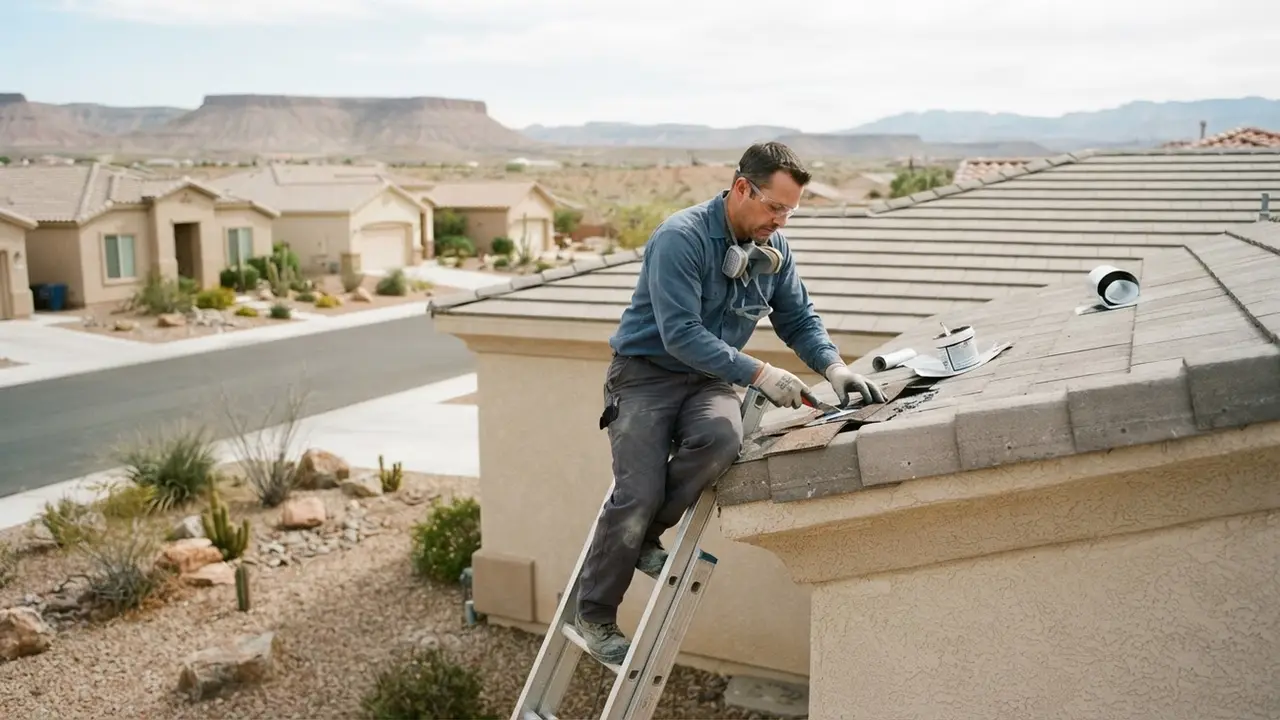
Water removal and extraction Mesquite NV helps homeowners, tenants, and businesses clear unwanted water before it spreads through flooring, walls, and contents. We locate the source, extract pooled water, and measure damp materials to plan drying. For a burst pipe, appliance leak, roof leak, or storm flooding, call Mesquite Water Damage Company at (833) 546-4116 and tell us what happened.
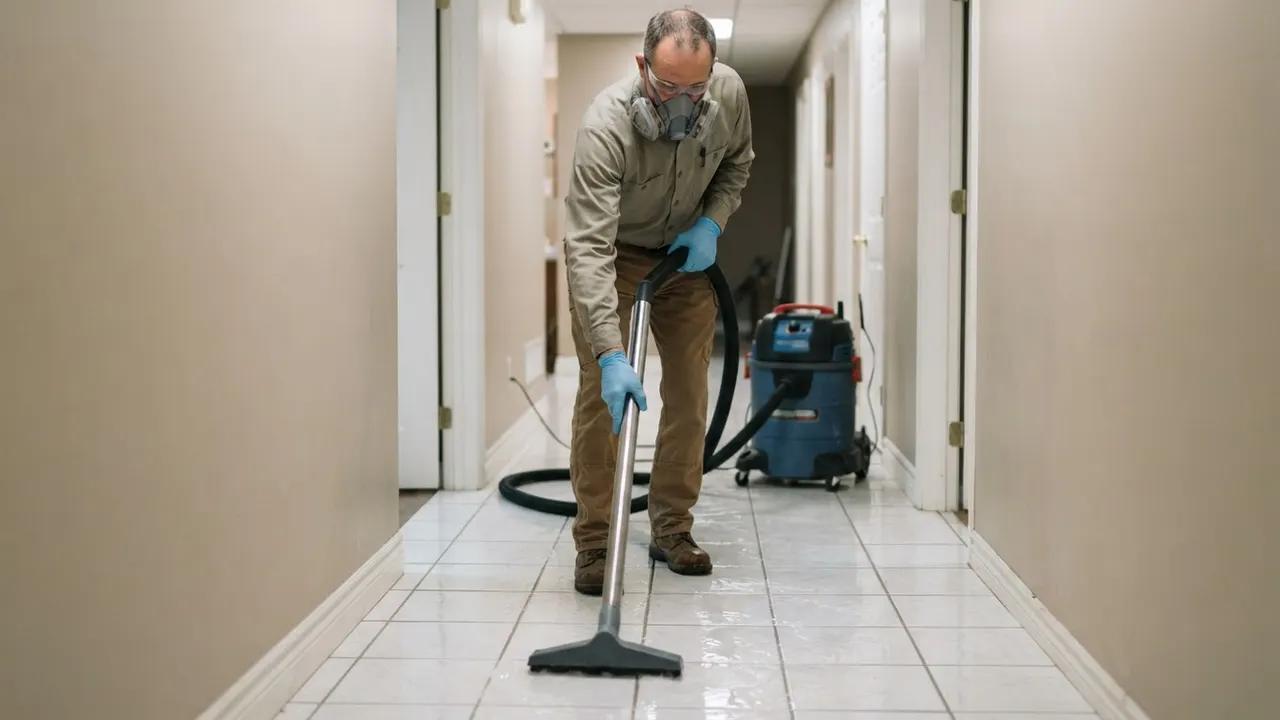
Water removal covers inspection of the affected area, extraction of accessible standing water, and moisture checks to identify wet materials. We explain the immediate findings and recommend drying equipment when readings show retained moisture. Repairs, contaminated-material handling, and mold remediation depend on the source and damage; we discuss those needs as separate work when they apply. The goal is to leave you with a clear account of what was removed and what comes next.
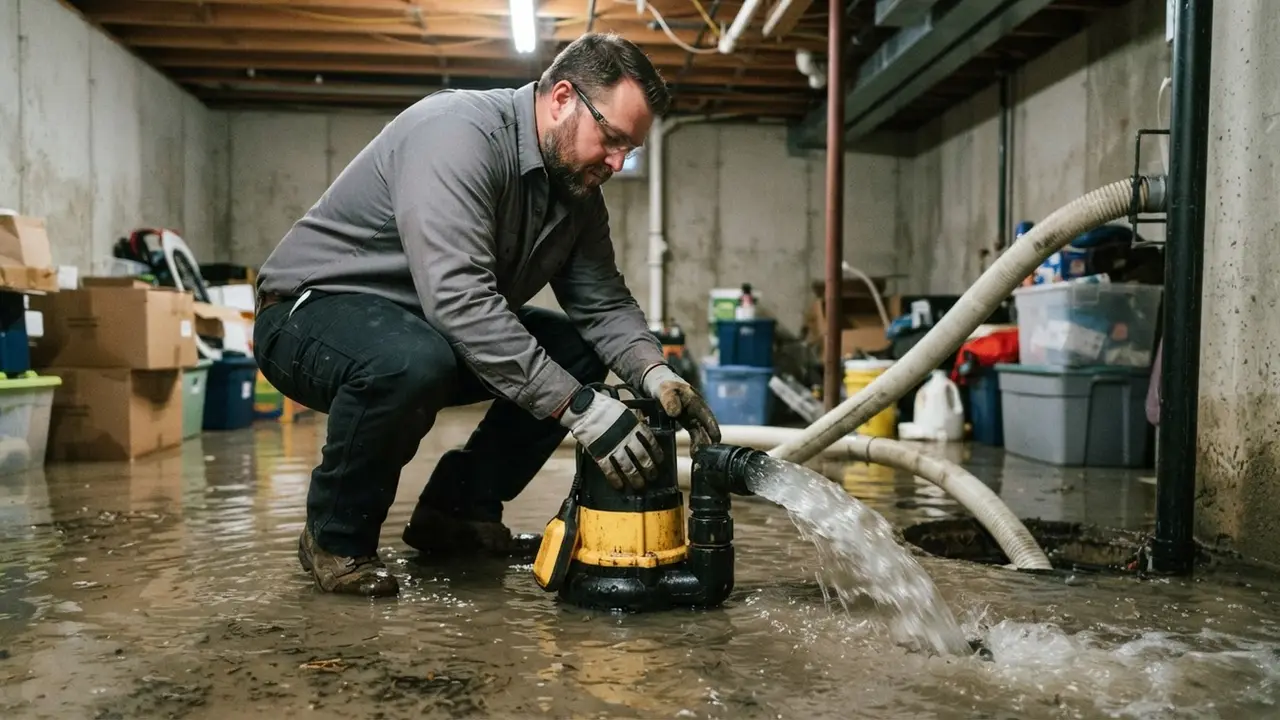
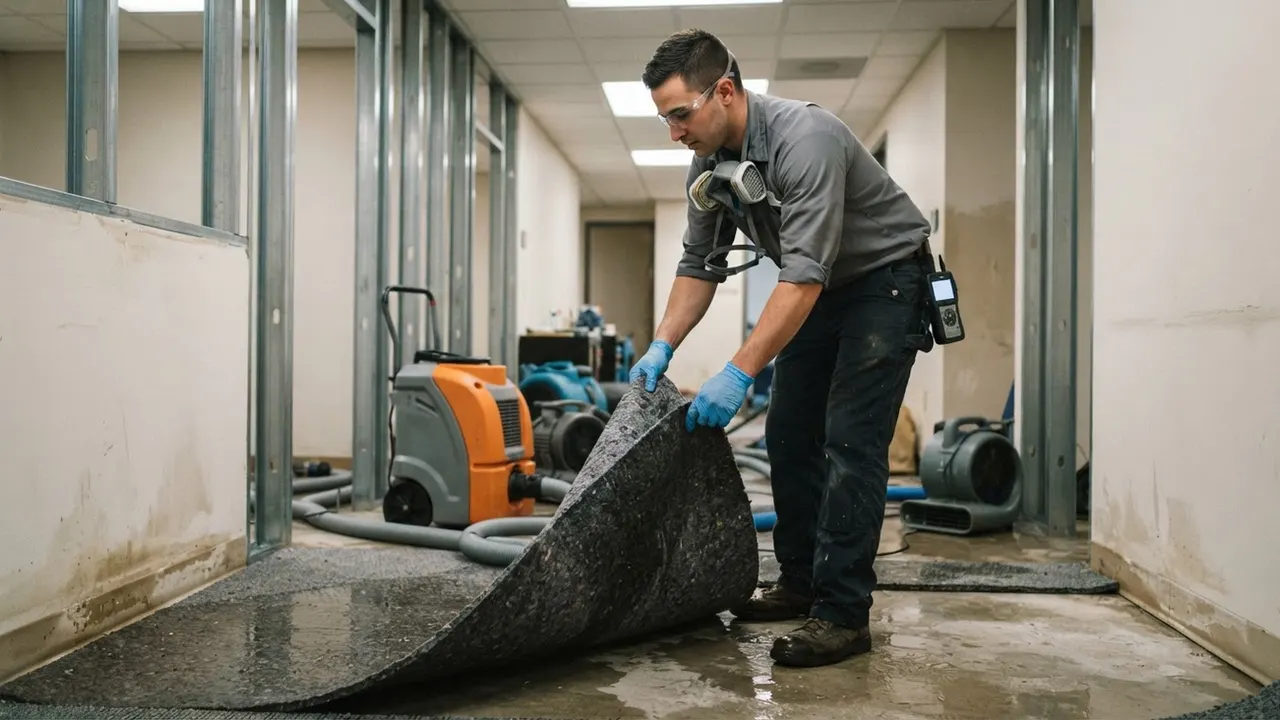
We remove accessible water from homes and check nearby flooring, walls, and contents for moisture. You will know what we found and which areas need continued drying.
We plan extraction around staff access, customer routes, and affected inventory. Property managers receive clear updates about wet areas, equipment placement, and follow-up readings.
Water removal and extraction Mesquite NV is a property restoration service that removes unwanted water and identifies wet materials that need further drying after a leak or flood. We inspect the affected rooms, check for electrical or contamination concerns, and use a water extraction unit to remove accessible water. A moisture meter helps us compare damp drywall, baseboards, carpet padding, and flooring with unaffected areas. Extraction is the first stage, not a substitute for drying; air movement and dehumidification address residual moisture after standing water is gone.
Mesquite properties can take on water from a burst pipe, slab leak, appliance leak, roof leak, or sewage backup. Even a shallow layer can travel beneath carpet and into wall cavities, so the visible puddle may not show the full affected area. Our water removal services Mesquite team checks the source and affected materials before choosing equipment. If you are searching for water removal and extraction Mesquite NV near me, call with the room, water source, and approximate depth so we can understand the situation.
Extract standing water first, then measure what the surface cannot show.
Water extraction Mesquite NV starts with a focused inspection and proceeds from source control to measured removal. We explain the immediate work, protect unaffected areas where practical, and tell you what readings or materials need follow-up. A small room may take a few hours to extract; drying often continues beyond the first visit.
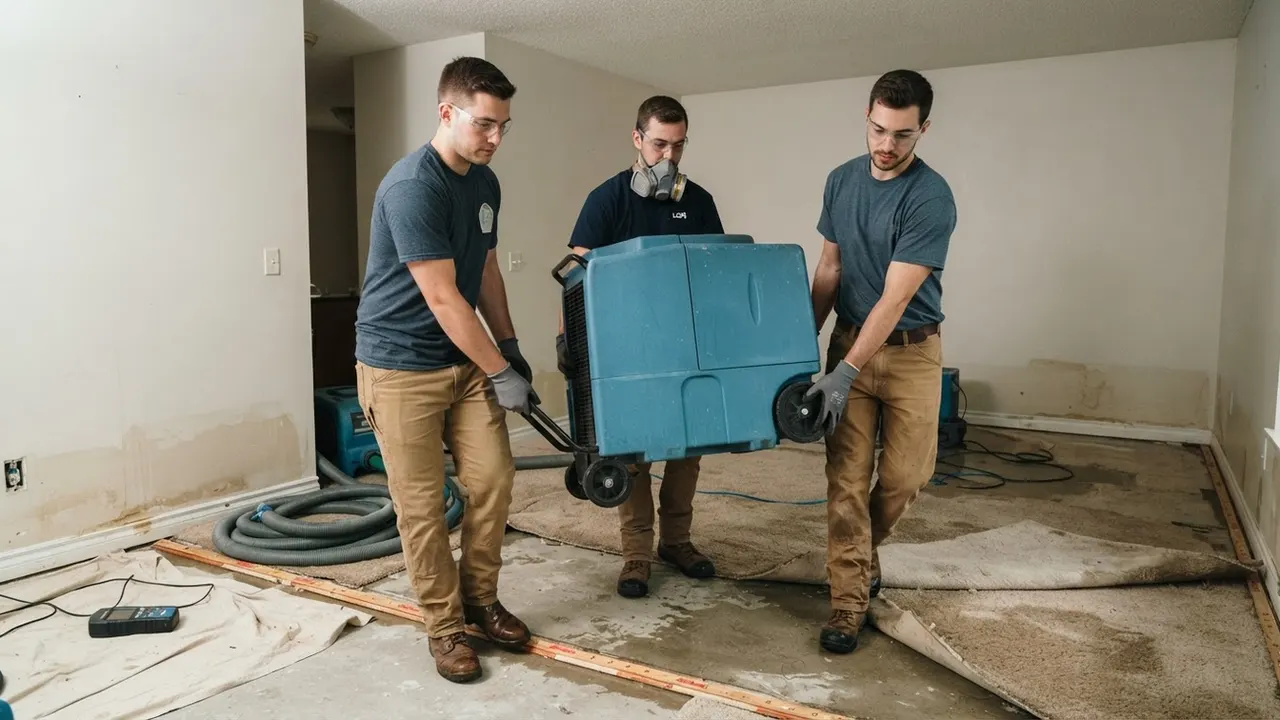
We begin by asking when the water appeared, what failed, and whether the source has stopped. Our team checks visible plumbing, appliances, ceilings, and nearby rooms for a continuing leak or migration. If water is near electricity or appears contaminated, we address that hazard before setting extraction equipment. This first assessment usually takes about 20 to 45 minutes, depending on access.
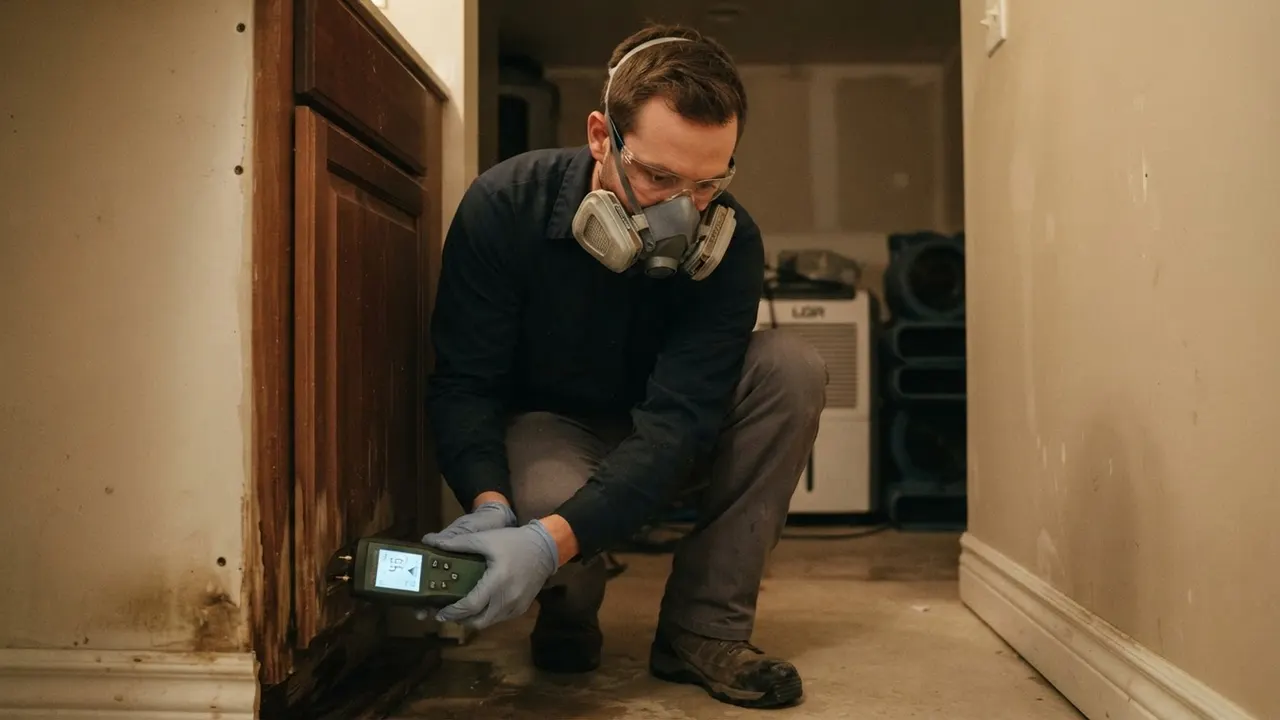
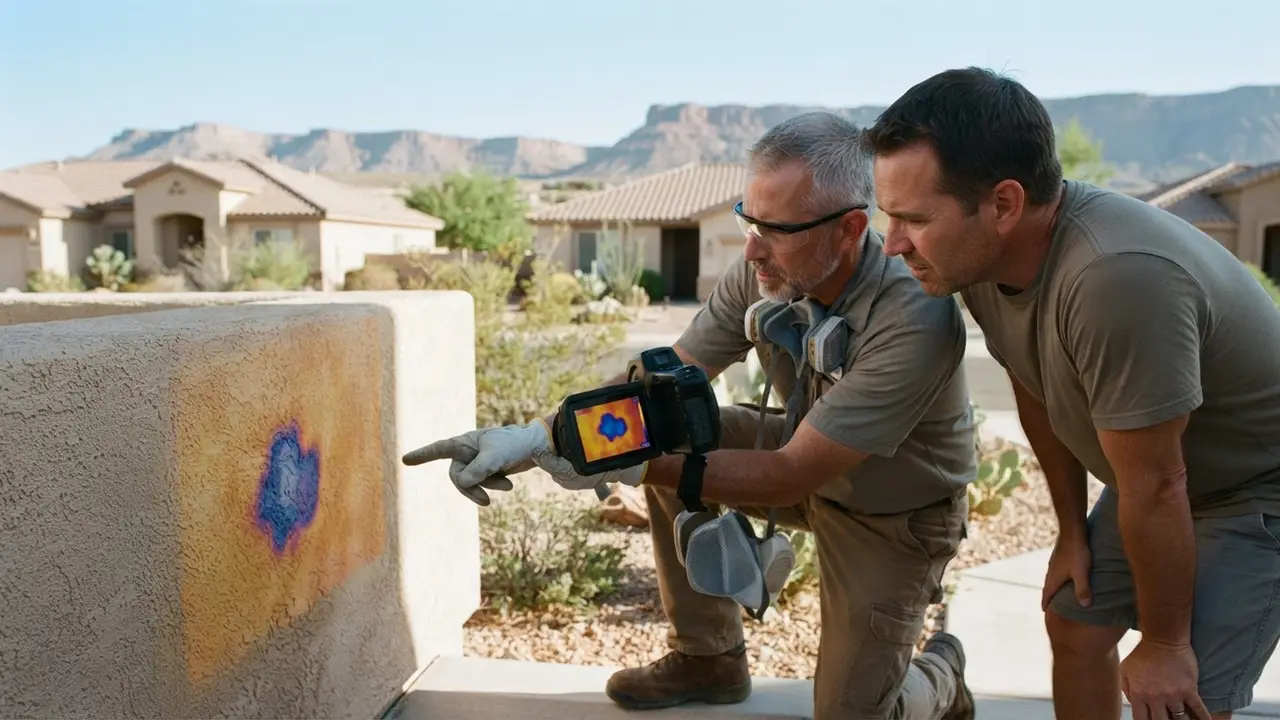
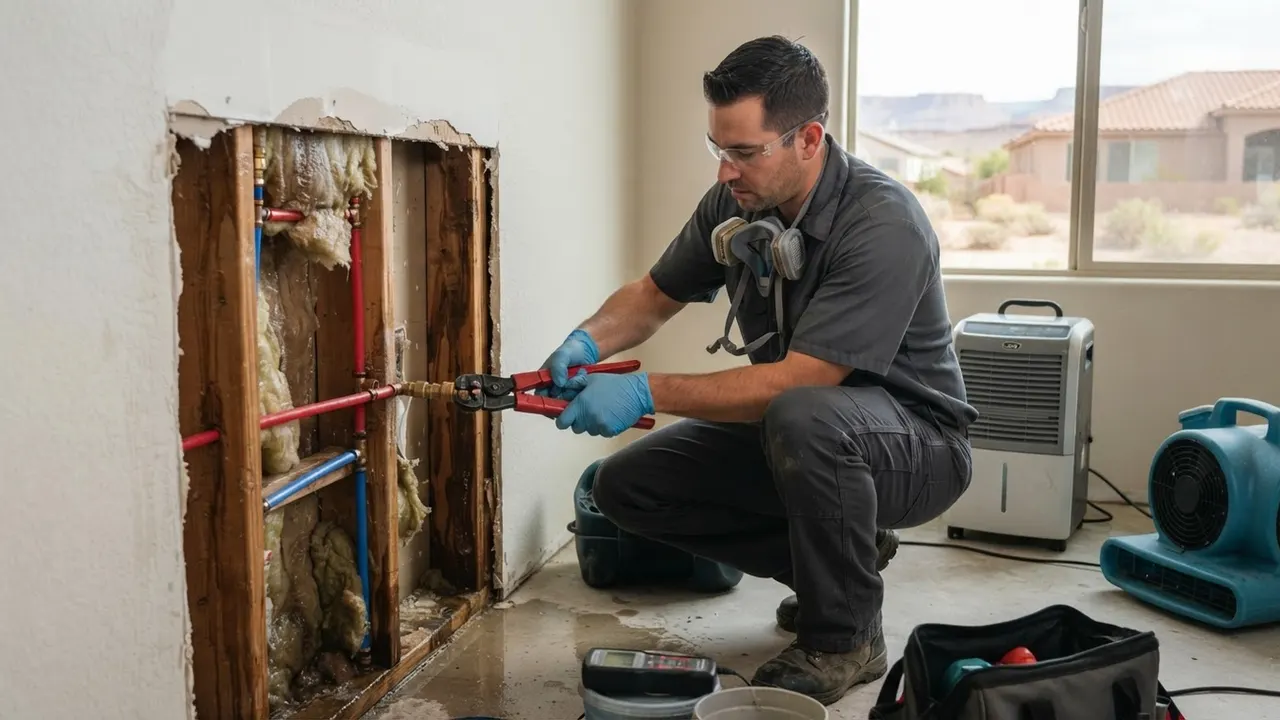
We inspect the affected room and nearby surfaces, then take moisture readings at representative points. A thermal imaging camera can help locate temperature patterns that warrant closer checking, while a boroscope camera can inspect an accessible cavity. We mark the wet area, note flooring and wall conditions, and explain what appears affected before moving equipment through your home.
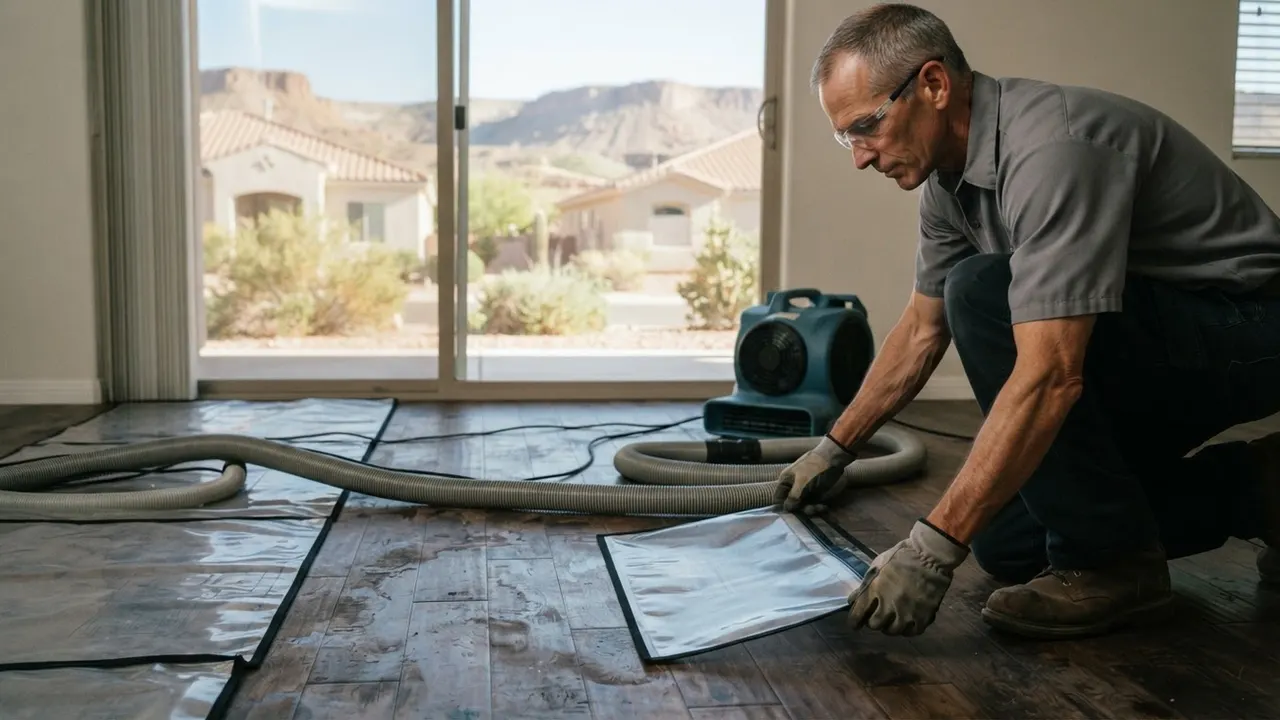
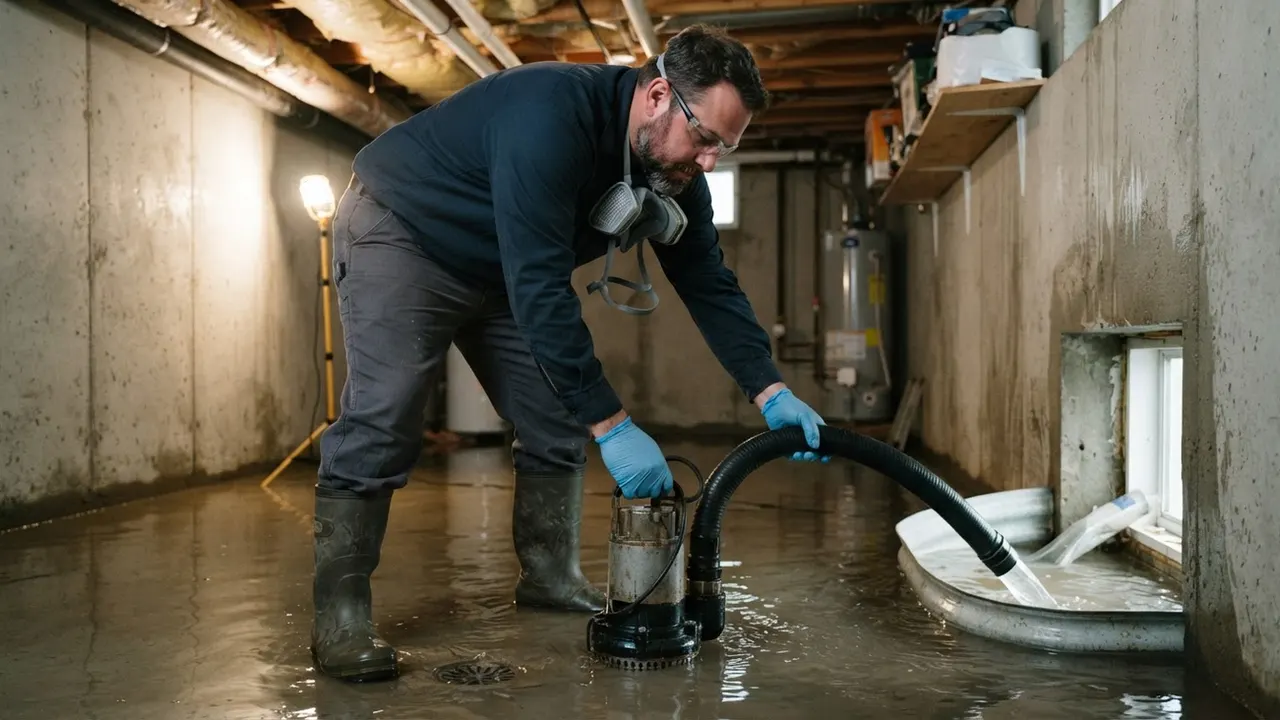
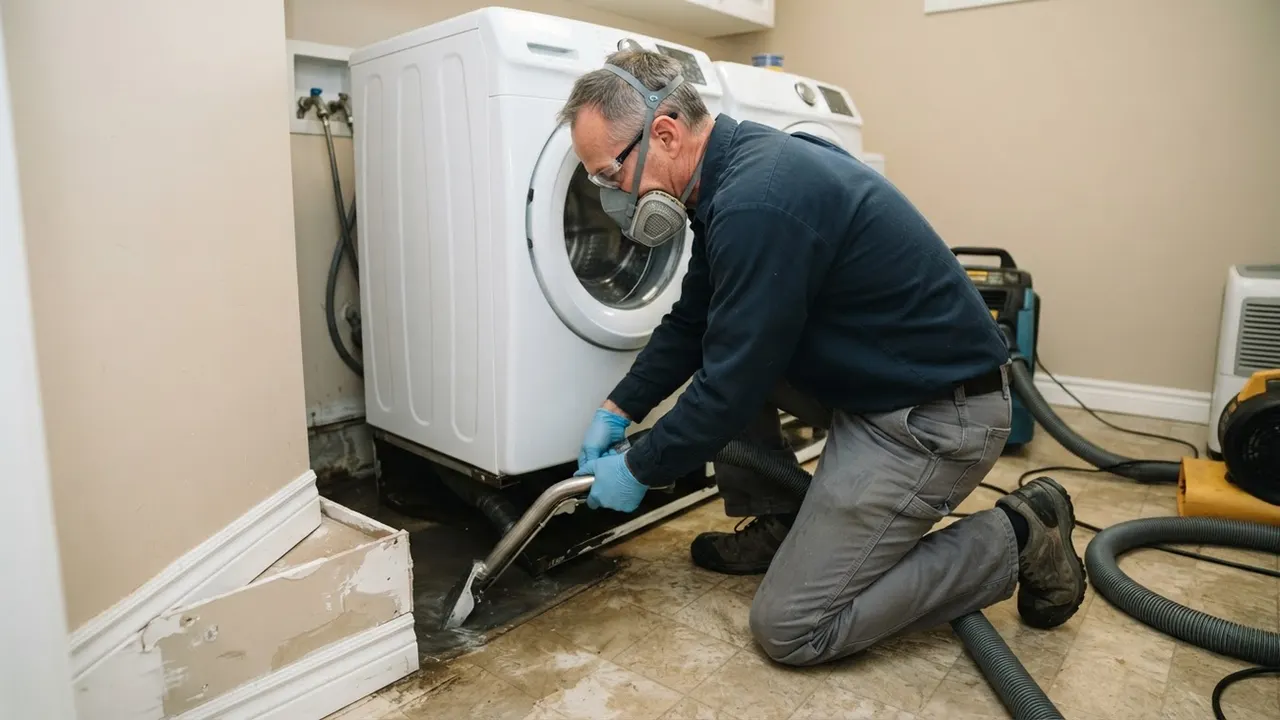
We use a water extraction unit and suitable attachments to pull water from floors, carpet, and other accessible surfaces. For a small contained area, active extraction may take 1 to 3 hours; larger or deeper flooding takes longer. We manage hoses and cords to preserve a clear route, and we pause if new water appears so the source can be addressed.
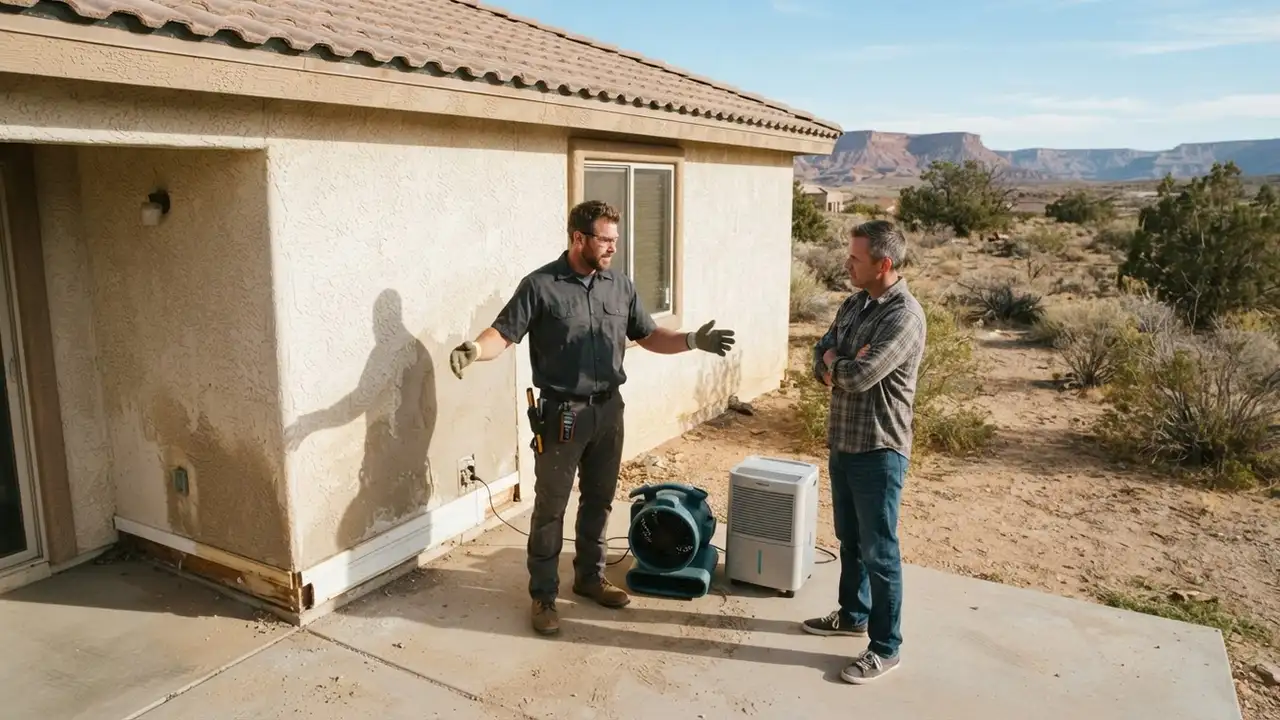
After extraction, we position air movers to circulate air across wet surfaces and a dehumidifier to collect moisture from the room. We choose placement based on material readings, room layout, and airflow rather than a fixed equipment count. You will hear the equipment running and receive guidance about access, temperature, and keeping doors or windows in the agreed position.
We return to measure the same materials and compare readings with the initial map. Drying commonly takes 3 to 5 days, though thick assemblies, concealed water, and indoor humidity change that timeline. We adjust equipment as readings improve, identify materials that remain wet, and review the next step with you before removing drying equipment.
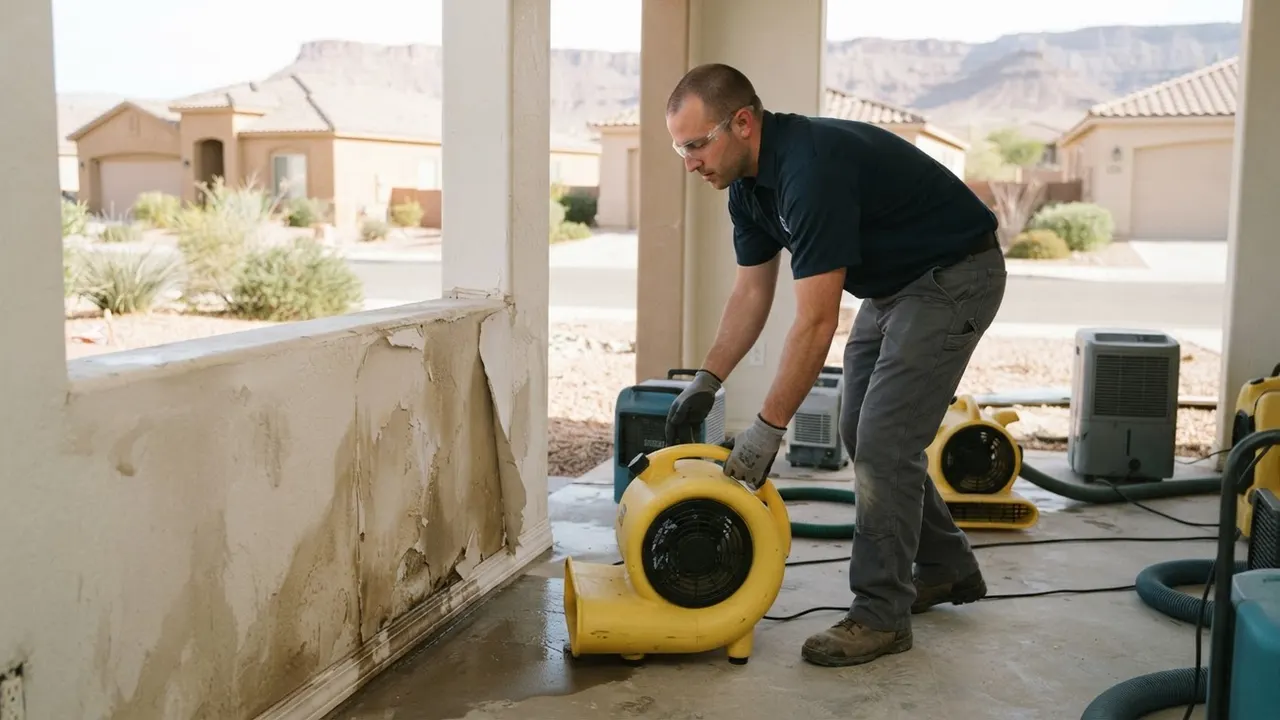
Pulls accessible standing water from floors and suitable carpeted surfaces. We select the attachment according to the material and water conditions.
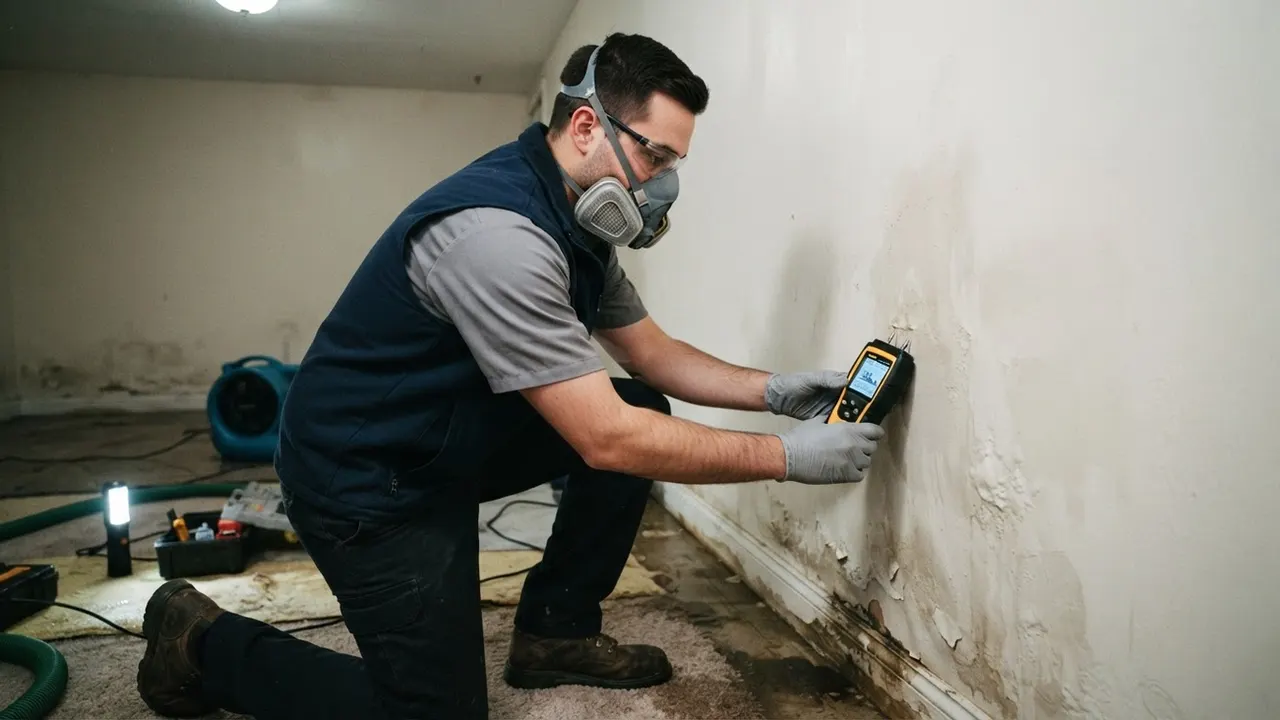
Measures moisture at selected points in materials such as drywall, baseboards, and wood flooring, giving follow-up visits comparable readings.
The air mover circulates air across wet surfaces while the dehumidifier collects moisture from indoor air during structural drying.
Shows temperature patterns that can guide closer inspection. We confirm suspected wet areas with direct checks and moisture readings.
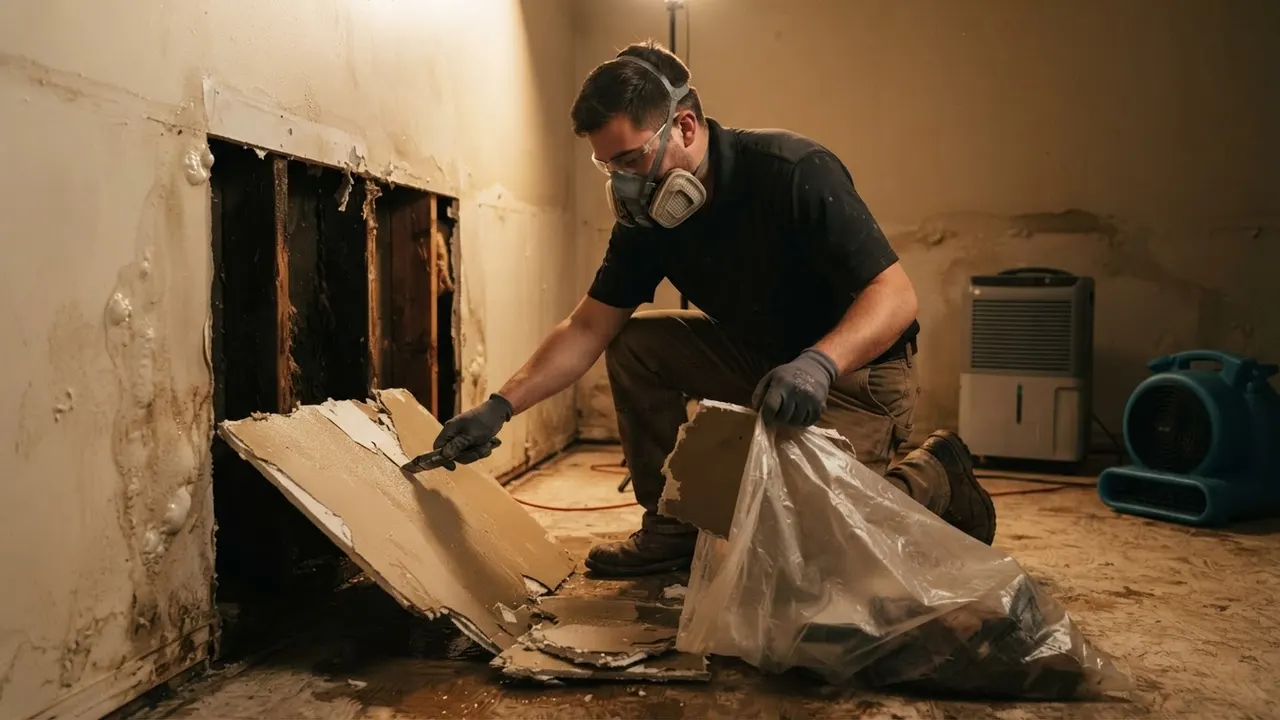
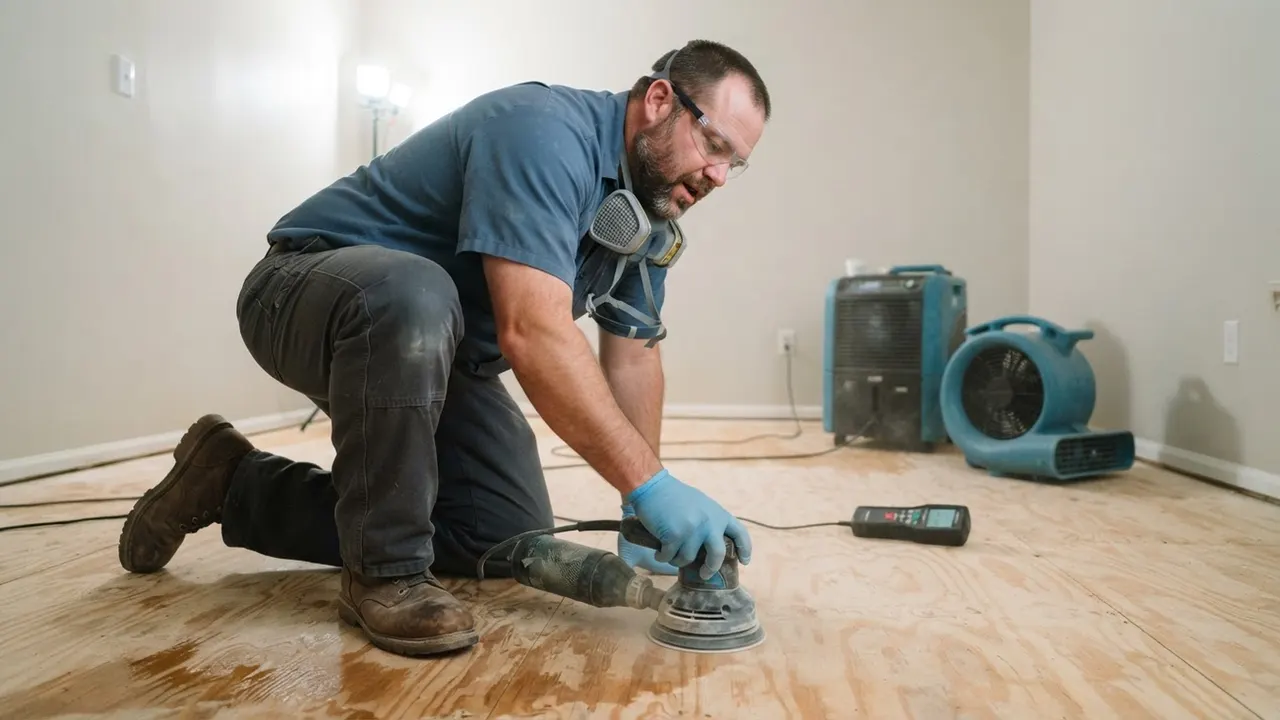
Filters airborne particles during appropriate restoration work, particularly when material removal or dust-producing activity is part of the plan.
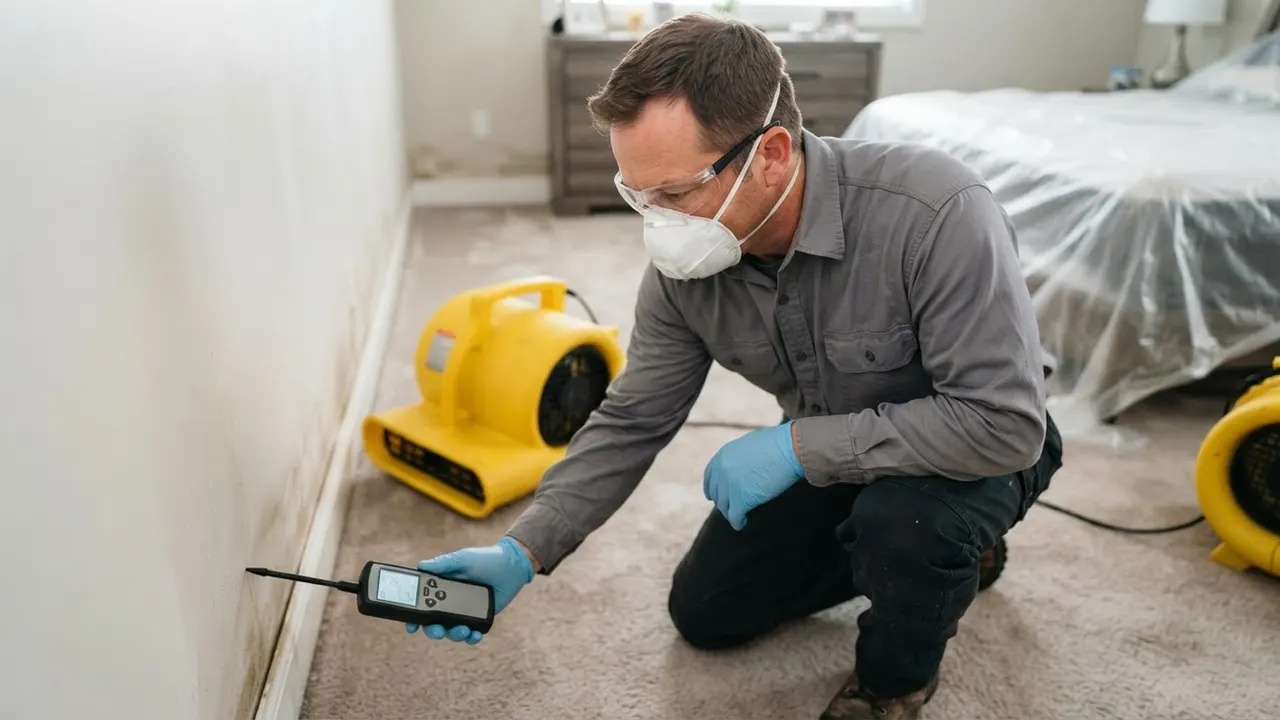
We record readings in affected materials and nearby comparison areas to understand how far water traveled. Follow-up checks use the same locations where practical. This method helps distinguish a dry surface from a damp wall cavity or subfloor and guides equipment placement.
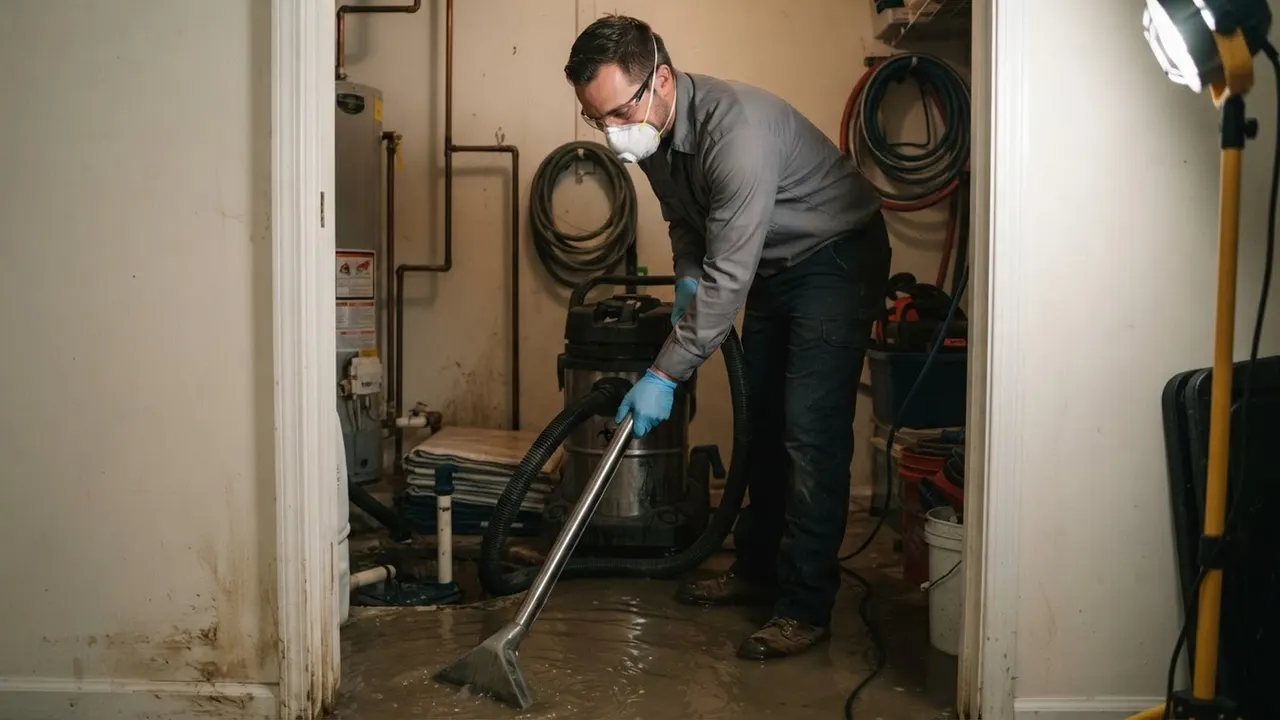
We identify whether water is still entering before removing it. A burst pipe, roof leak, and appliance leak require different source-control steps. Once the active source is controlled or isolated, we extract accessible water and check adjacent areas for migration.
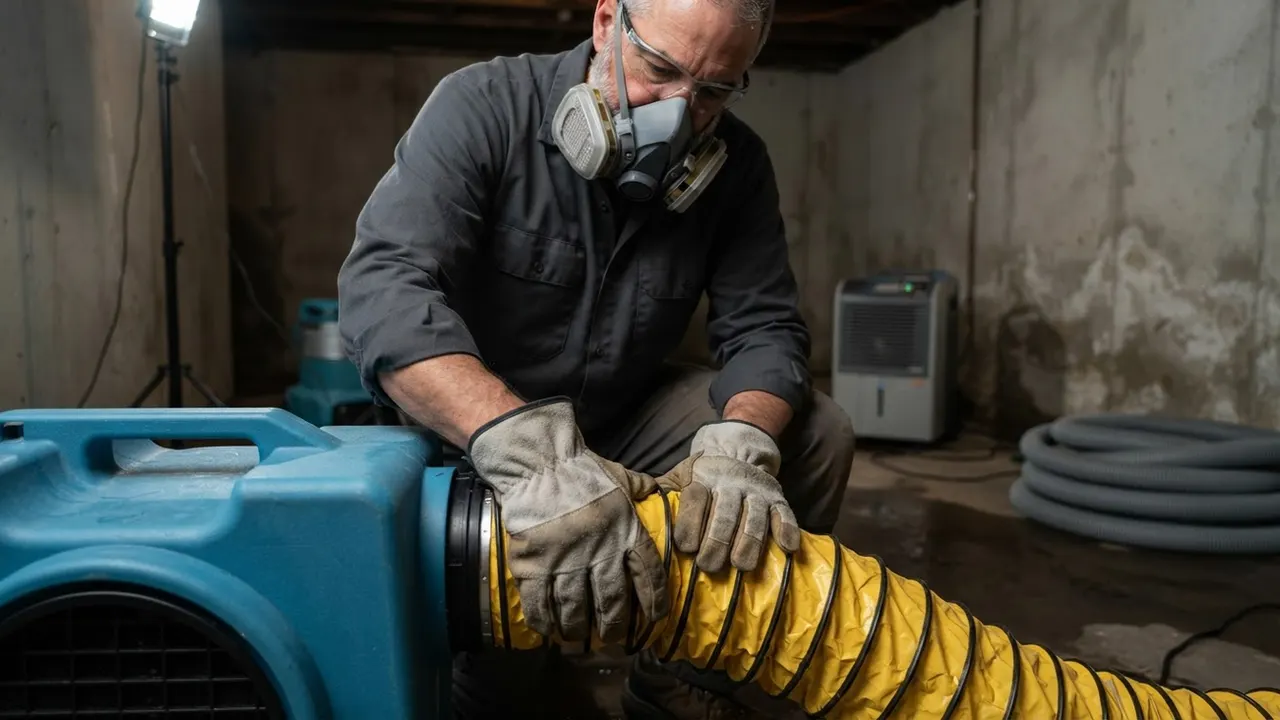
After extraction, we combine air movement with dehumidification where readings indicate retained moisture. We recheck materials and adjust equipment as conditions change. Drying ends when measurements and material conditions support removal of equipment, not simply when the room feels comfortable.
We begin by confirming whether the supply is shut off and checking the route water took through the kitchen and hall. Then we extract accessible water, inspect cabinet bases and flooring edges, and set drying equipment where readings support it. We explain what to watch while the room dries. You get the standing water removed and a practical drying plan before moisture has more time to move into adjoining finishes.
We assess the laundry floor, carpet, padding, and baseboards, then remove accessible water with suitable extraction tools. We check the hose source and measure adjacent materials so the drying plan includes the hallway, not just the appliance footprint. The leak pathway is mapped, wet surfaces are addressed, and you know whether the carpet and padding need continued drying or further work.
We assess entry points and the affected sales or stock area, then extract pooled water and keep access routes clear. We check nearby flooring and stored contents for moisture. If an opening remains exposed, we discuss temporary protection alongside the drying needs. You can see what areas were affected and what needs attention before normal business activity resumes.
We check whether water is still entering, inspect the ceiling and wall surfaces, and extract any pooled water from the floor. We record moisture conditions and coordinate drying with source control so wet insulation or drywall is not overlooked. The visible water is removed, and you have a clearer picture of concealed moisture and the repairs needed to prevent repeat damage.
Mesquite, Nevada properties face intense summer heat, dry outdoor air, and seasonal rain that can drive water through roof openings or low thresholds. Dry weather does not dry a closed wall cavity on its own; moisture trapped behind drywall or beneath flooring still needs measurement and airflow. We inspect the affected rooms, identify likely pathways, and check materials rather than relying on the outdoor conditions. A burst pipe, appliance leak, or storm event can affect different building materials, from tile and grout to hardwood flooring and carpet padding. Our water extraction Mesquite NV work begins by removing accessible water and then checking whether structural drying is needed. If you are looking for same day water extraction Mesquite NV, tell us the source, affected floor, and whether electricity or sewage is involved. We serve Clark County neighborhoods and use local access details to plan the route and equipment movement. We document observed conditions and follow applicable work practices; repair permits or code requirements depend on the repair being performed, not water extraction alone.
A failed supply line left shallow water across a kitchen floor and wet the cabinet toe-kick. The homeowner had shut off the visible valve, but the puddle had spread beneath the edge of the flooring. Surface wiping removed some water without showing whether the cabinet base and nearby wall remained damp.
We extracted the accessible water, checked the cabinet base and adjacent wall at several points, and placed drying equipment where readings showed retained moisture. The initial work took about 2 hours. Follow-up readings over 3 days showed the checked materials trending toward the dry comparison area before equipment was removed.
Check sink supply connections and cabinet interiors periodically for drips or swelling. If a new puddle appears, shut off the local valve when safe and call before water reaches adjacent flooring.
Rainwater entered beneath a storefront door and spread across part of the sales floor before opening. Boxes near the entrance had damp lower edges, and the wet area extended beyond the visible threshold. Staff needed a clear route through the room while the water was removed.
We cleared the standing water, checked flooring transitions and nearby contents, and kept the access path open during extraction. The first removal took about 3 hours. Moisture checks guided air-mover placement, and follow-up over 4 days showed which areas had dried and which contents needed separate attention.
Inspect door sweeps and threshold seals before the rainy season, and keep stock raised off the floor near entry points. After water intrusion, check the full route rather than only the doorway.
A leaking washer connection wet the laundry floor and reached carpet in the adjoining hall. The carpet surface felt cool but did not reveal how much water had entered the padding. A nearby baseboard showed early swelling, and the source needed attention before drying could begin.
We confirmed the leak had stopped, extracted the laundry floor and affected carpet, and measured the padding edge and baseboard. Extraction took about 2.5 hours; drying continued for 3 days with readings checked along the hallway. The homeowner received a clear account of the areas that remained wet after surface removal.
Inspect washer hoses and fittings for cracks, bulges, or drips, and replace damaged parts promptly. Keep the shutoff valves accessible so water can be stopped quickly if a connection fails.
Water spreads beyond the spot where it first appears, and waiting can leave more material wet than the visible puddle suggests. We use extraction and moisture checks to find the extent of the problem. If water is still entering, stopping the source remains part of the response.
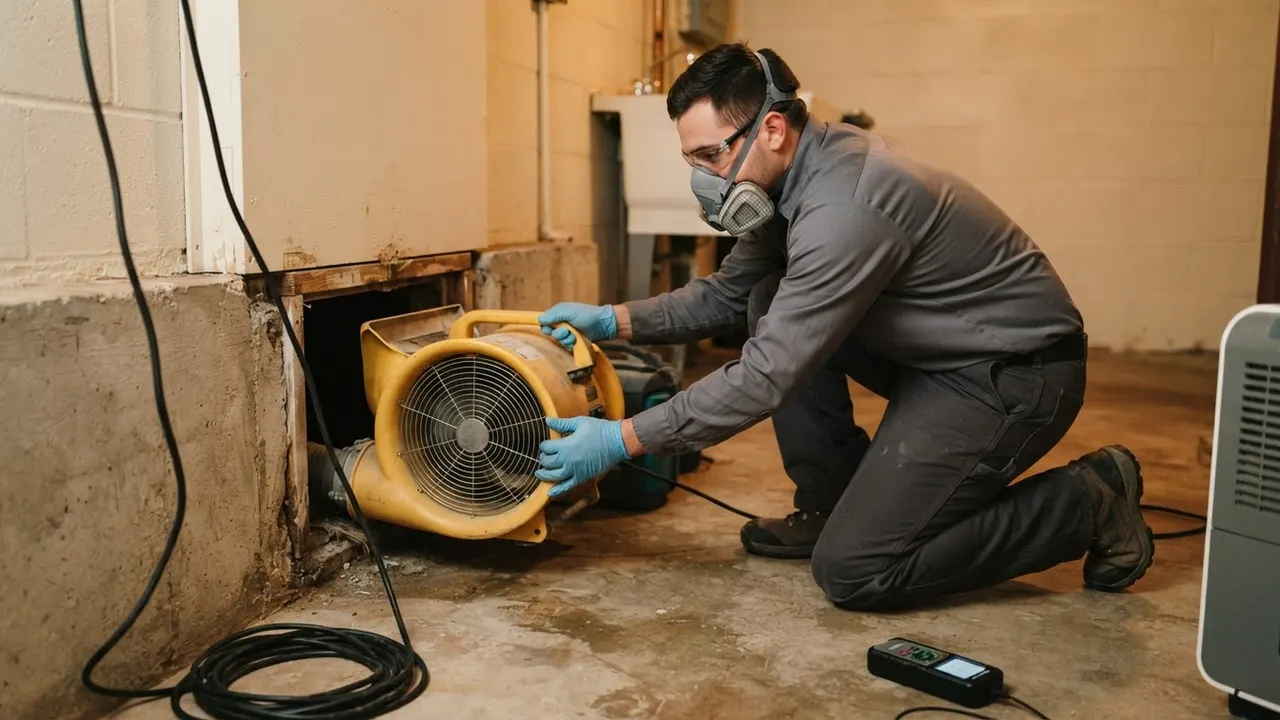
We confirm whether the pipe is still leaking, remove accessible water, and check flooring edges and nearby walls. A moisture map helps identify areas that need drying beyond the hallway. If the source is not controlled, we explain that extraction alone will not stop additional water from entering. Water under flooring can soften subfloor materials and reach baseboards or adjoining rooms. Delayed removal makes it harder to tell where the leak traveled.
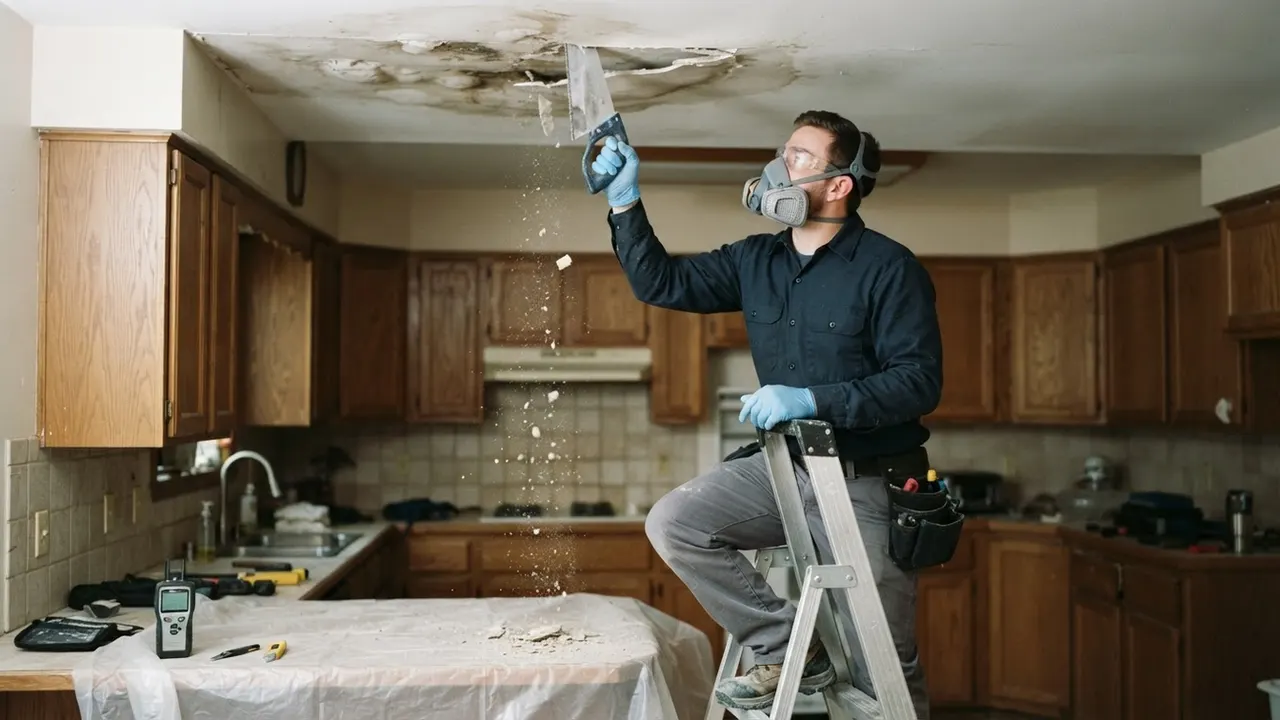
We extract the carpet surface and assess the pad, adjacent baseboards, and cabinet edges. The water source and saturation determine whether materials can dry in place or need removal. We set drying equipment only after checking the affected area and explaining the next step. Wet padding can hold water after the carpet surface feels nearly dry, creating odor and extending drying time. Water may also migrate under cabinets.
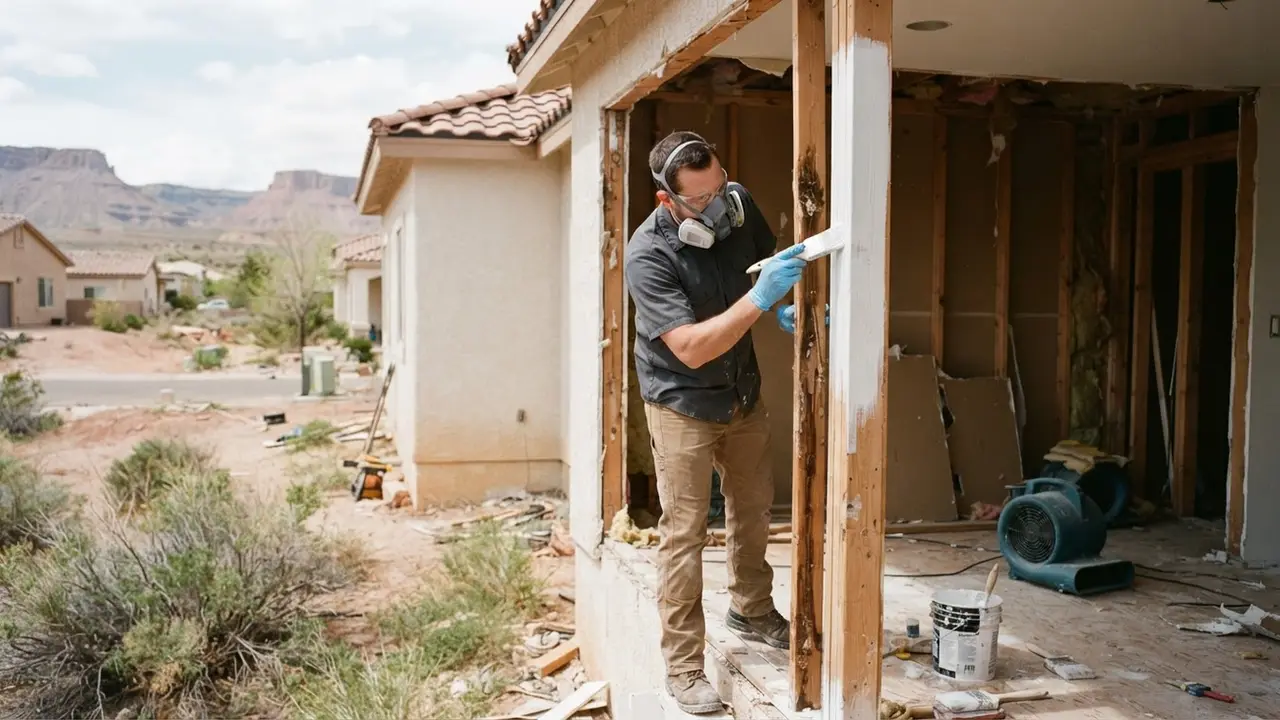
We check for active dripping, assess accessible ceiling and wall areas, and remove water from the floor. Where safe access allows, we inspect further and document affected materials. Roof protection and structural drying may be needed to prevent another wetting cycle. Water trapped above a ceiling can continue dripping and wet insulation or wall cavities. A floor-only cleanup can miss the source and leave materials damp.
We keep the response focused on safety and the contamination source, then plan removal and cleaning appropriate to the affected materials. Avoid walking through the water or moving soaked items into clean rooms. We explain which surfaces require additional treatment beyond water extraction. Sewage water can contaminate porous finishes and presents a contact hazard. Ordinary clean-water extraction without appropriate handling can spread contamination.
We extract pooled water from accessible floors and carpet, then check whether moisture has reached the padding or edges. For a residential water removal Mesquite NV call, that distinction helps determine whether carpet can remain in place or needs targeted removal. Your walkways are cleared so the next inspection and drying steps can proceed safely.
A moisture meter provides readings at selected points in drywall, baseboards, and flooring. We compare wet areas with unaffected material and use those readings to track progress instead of relying on touch. You get a practical picture of where drying equipment belongs and which materials need further attention.
Water left against plywood, hardwood flooring, or carpet padding can contribute to swelling, delamination, and persistent odor. We remove accessible water and document the condition of affected finishes. Early extraction does not guarantee that materials can be saved, but it gives them a better chance than leaving them saturated.
Standing water around appliances, outlets, or a utility room requires caution before extraction begins. We assess access and visible hazards, then organize hoses and equipment to keep paths clear. If water may involve sewage or another contaminated source, we change the work approach rather than treating it like a clean supply-line leak.
Clear records you can keep and share.
Recorded locations and materials checked during the visit.
Selected readings to compare during follow-up drying.
Equipment placement and practical access instructions.
A dry-looking floor can conceal moisture in padding, subfloor, or wall cavities. We check materials and compare readings before deciding that drying is complete.
Water follows gaps and edges beneath finished surfaces. We inspect adjoining rooms and transitions instead of assuming the visible puddle marks the full area.
Tile, hardwood, carpet, and drywall respond differently to moisture. Readings and observed condition guide whether each material dries in place or needs further work.
Clean supply water and sewage backup require different handling. Identifying the source helps determine safe extraction and which materials need additional cleaning.
Outside these neighborhoods? Call and ask about service in your area. (833) 546-4116
Water removal jobs in Mesquite often vary for localized extraction, with larger losses costing more. Typical 2026 pricing depends on water volume, affected rooms, contamination, access, and whether drying equipment is needed. We discuss pricing upfront and explain the work driving the cost. Structural repairs, material replacement, and mold remediation are separate work categories when the damage requires them.
Active extraction often takes 1 to 4 hours for a localized room, while drying commonly continues for 3 to 5 days. A larger flood, concealed water, or saturated insulation can extend the work. We measure materials at the start and during follow-up visits, then adjust equipment according to readings. The visible water may be gone well before the structure is dry.
We use a water extraction unit for standing water, air movers to circulate air, and a dehumidifier to remove moisture from indoor air. A moisture meter helps track materials, while a hygrometer monitors room humidity. Equipment selection depends on the water source, flooring, access, and wet area; a contaminated sewage loss needs different handling than a clean appliance leak.
Yes, we can perform same day water extraction Mesquite NV when scheduling and site conditions allow. Call (833) 546-4116 with the address area, water source, and whether water is still entering. Do not enter water near electrical equipment, and avoid contact with sewage. Our first step is to assess the hazard and source, then remove accessible water and plan any needed drying.
Tell us where the water is, what caused it, and whether it is still entering. Our team will discuss the next step and arrange an assessment. Call Mesquite Water Damage Company at (833) 546-4116 for direct help from a local water damage team.
Call (833) 546-4116 to explain what happened and where water is collecting. We take calls for water damage requests and connect you with an independent company that can discuss service details directly. If the leak is active, shut off the source when safe and tell us whether the water reached electrical equipment, flooring, or more than one room.