Lawrence Homes
We help Lawrence households limit water spread and get affected rooms assessed. Tell us what is wet, when it started, and whether the source is controlled.
- Family homes
- Older plumbing
- Carpeted living rooms
- Roof leak interiors
Mesquite Water Damage Company handles emergency water damage repair in Lawrence, Nevada, for burst pipes, roof leaks, appliance failures, and stormwater inside homes. Our Lawrence emergency water damage repair starts with stopping the source when safe, removing standing water, and checking affected materials before drying begins. We serve Lawrence Estates, Lawrence North, Lawrence South, and Lawrence Park, including homes in ZIP code 89027.
Serving Lawrence and nearby
Emergency water damage repair in Lawrence is a property recovery service that removes unwanted water, limits material damage, and dries affected spaces after leaks or flooding. Mesquite Water Damage Company works across Lawrence Estates, Lawrence North, Lawrence South, and Lawrence Park, where family homes and older plumbing call for careful source checks before cleanup. We inspect the affected rooms, map moisture, extract water, and set drying equipment according to the materials involved. Our water damage restoration Lawrence service addresses carpet, drywall, hardwood flooring, and concealed wet areas, not just the visible puddle. You receive a clear explanation of the immediate work and the next steps. We document conditions for your records and coordinate with you as the job moves from extraction to drying and repairs.
Lawrence is part of the Mesquite service area in Clark County, and homes here face a mix of plumbing failures and weather-related water entry. Older homes with original plumbing need prompt attention when a supply line, fixture connection, or water heater begins leaking. Stormwater pooling in yards can also expose weak drainage points, while roof leak issues during monsoon weather can wet ceilings and insulation before the stain appears. We serve Lawrence because a local response keeps the first actions practical: identify the source, protect belongings, remove water, and begin measured drying. If you are searching for emergency water damage repair near Lawrence, call us with the address and what you see.
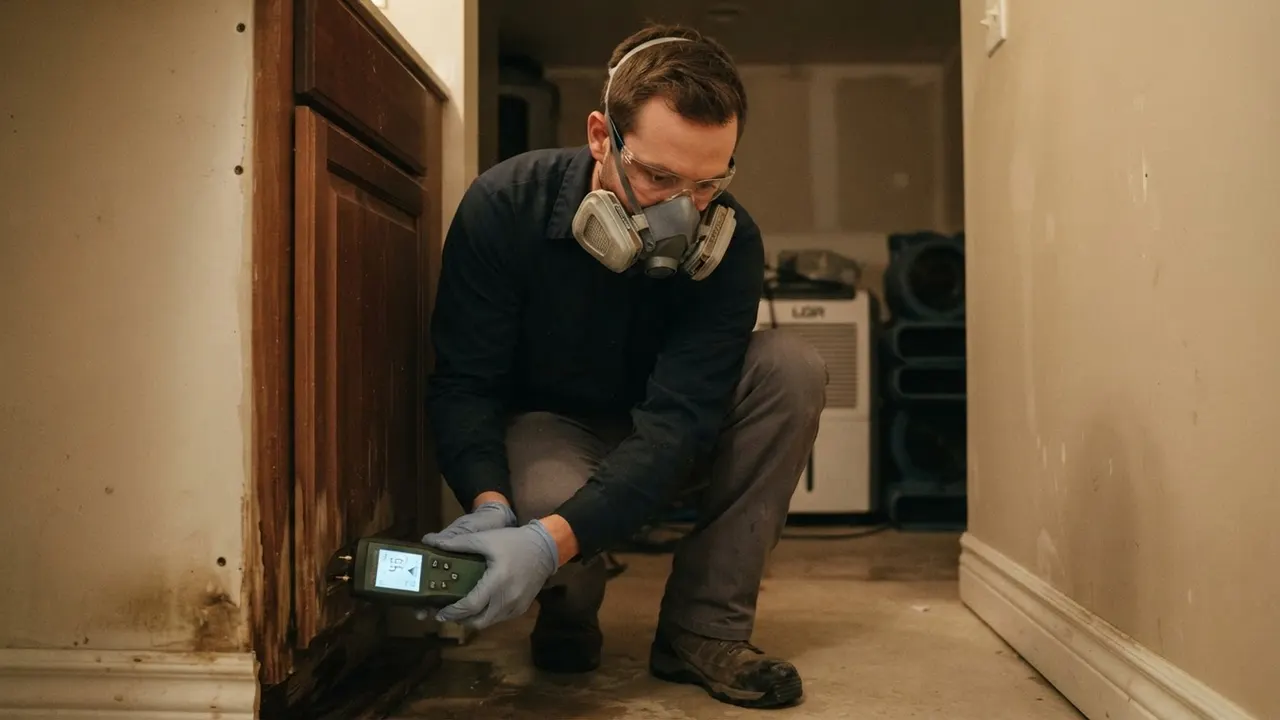
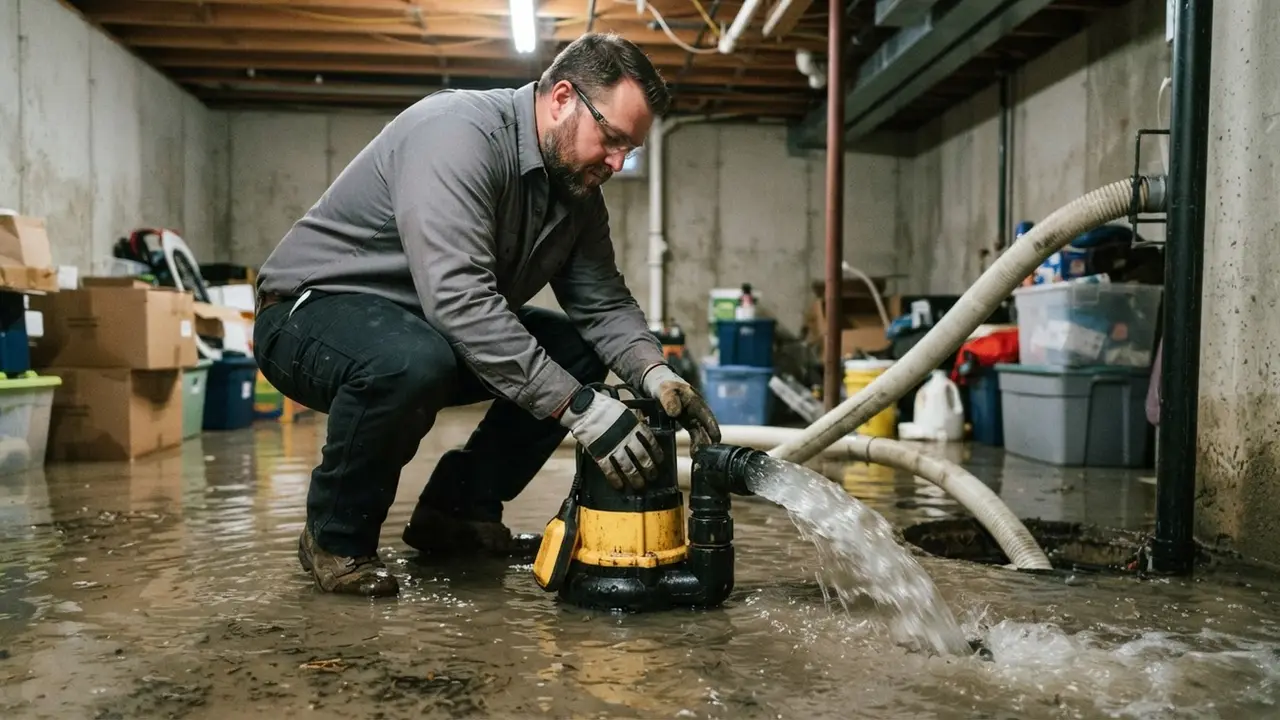
We locate the source and check how far water traveled through your Lawrence home. Extraction starts where standing water is deepest, then readings guide drying around floors, walls, and cabinets. Tell us which rooms are affected and whether the leak is still active.
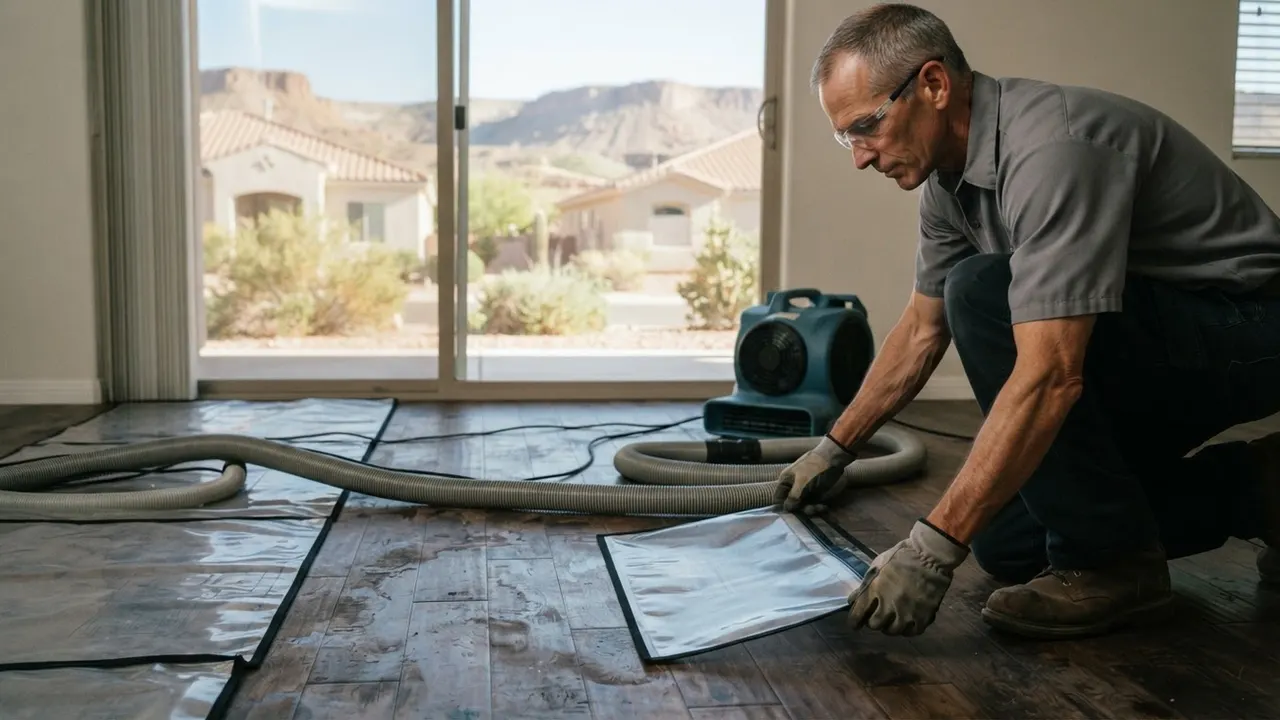
Lawrence stormwater cleanup starts by identifying where water entered and which materials it reached. We remove water, separate affected belongings, and check floors and lower walls before setting drying equipment. Tell us if the water came from outside or a plumbing source.
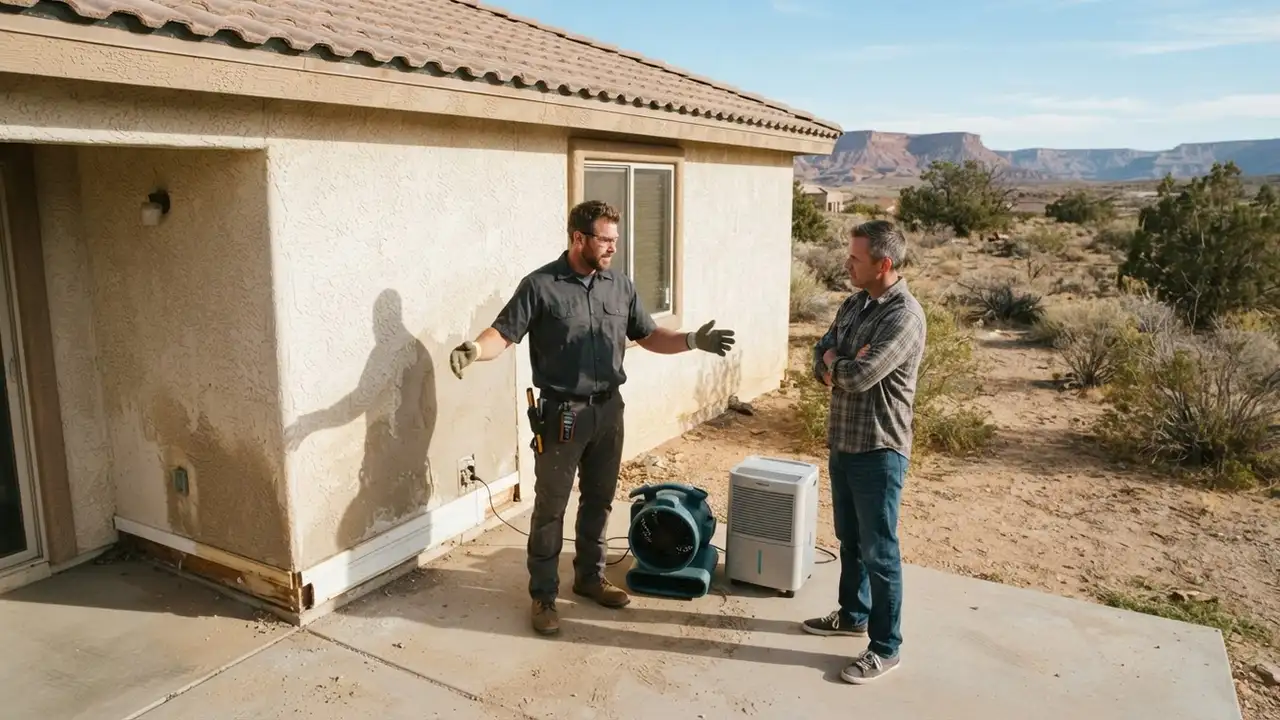
For a burst pipe in Lawrence, stop the supply if safe and tell us whether water is still flowing. We assess the wet rooms, remove standing water, and check nearby wall and floor materials. Plumbing repair and structural drying are coordinated as separate steps.
We help Lawrence households limit water spread and get affected rooms assessed. Tell us what is wet, when it started, and whether the source is controlled.
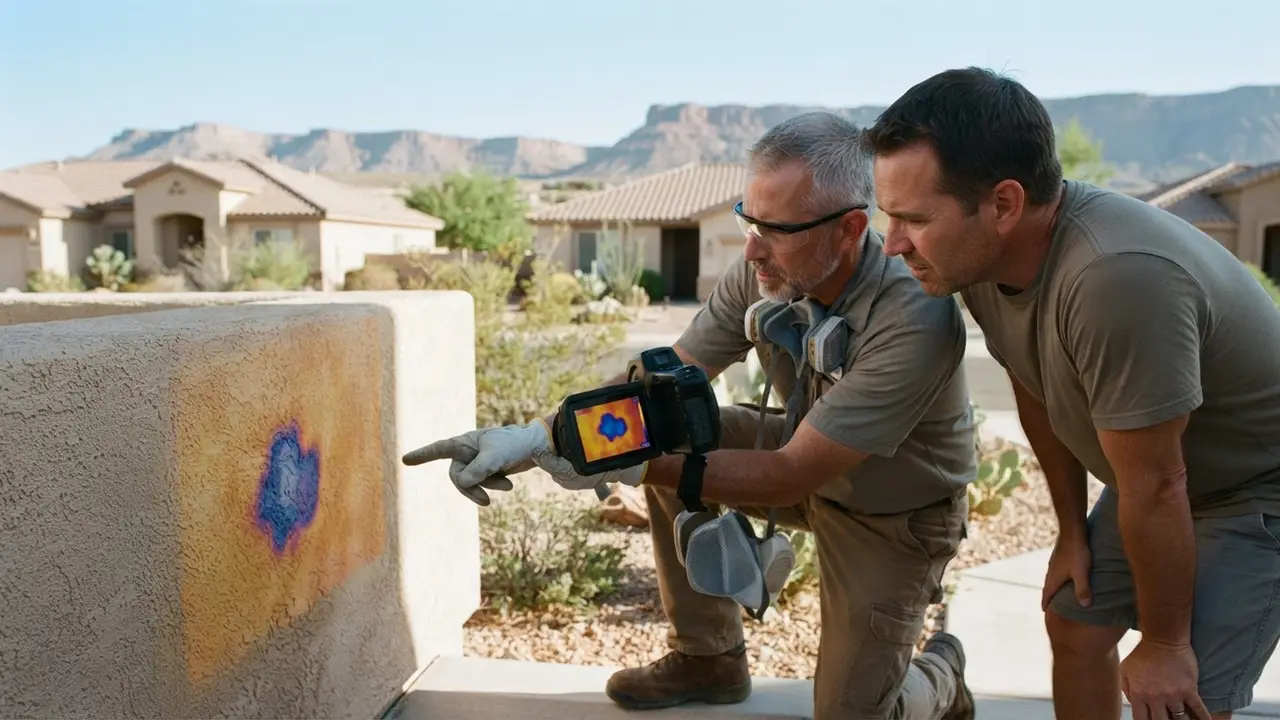
We assess water damage in Lawrence business spaces and organize work around access and affected areas. Share operating hours, entry instructions, and the water source when arranging service.
Lawrence homes face several practical water-loss risks: older homes with original plumbing, stormwater pooling in yards, and roof leak issues during monsoon weather. Hot, dry conditions do not eliminate interior moisture; water trapped below flooring or inside a wall still needs measurement and controlled drying. The Lawrence emergency water damage repair process changes with the source, water category, and building assembly. We investigate each loss instead of assuming that a small stain means a small repair.
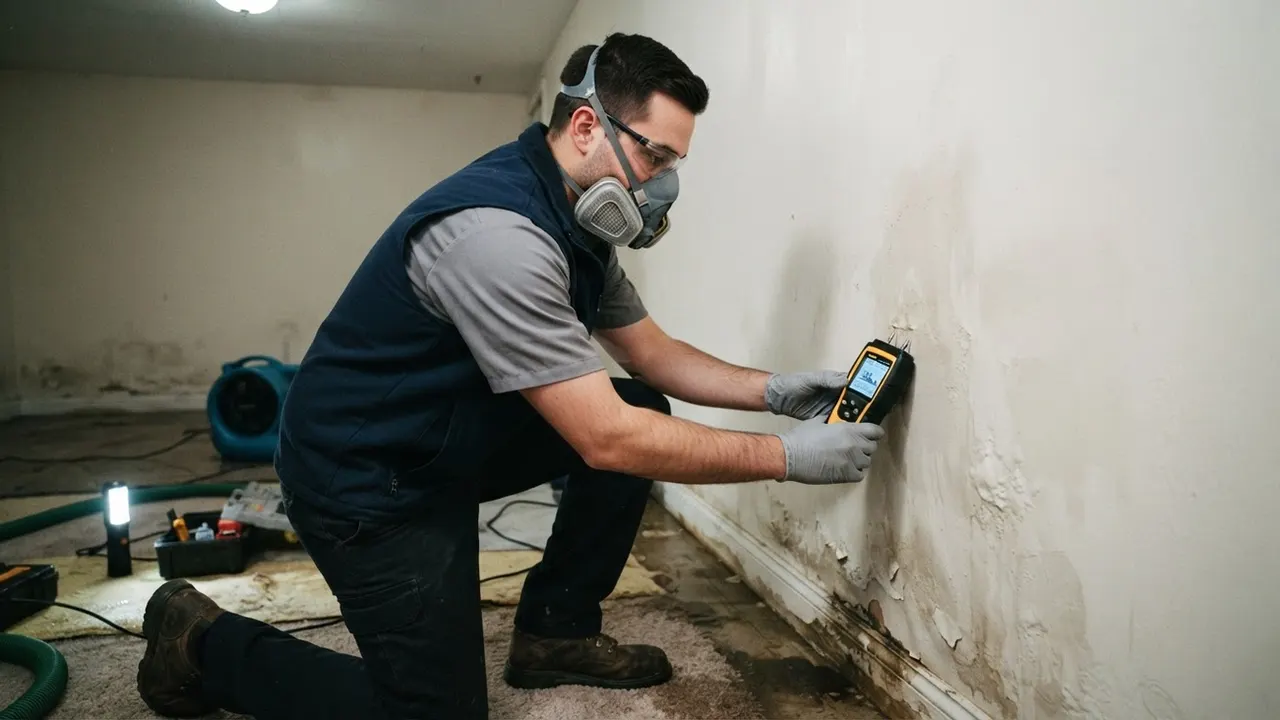
Older plumbing connections can weaken, and a slow leak may stay concealed behind cabinets or finished walls. Lawrence homes with original plumbing can show damage well away from the actual leak, especially when water follows framing or flooring seams. We trace the likely path, check adjoining surfaces, and document moisture before opening materials. We extract any standing water and explain where targeted access may be needed. A plumber handles pipe repair when the source requires plumbing work.
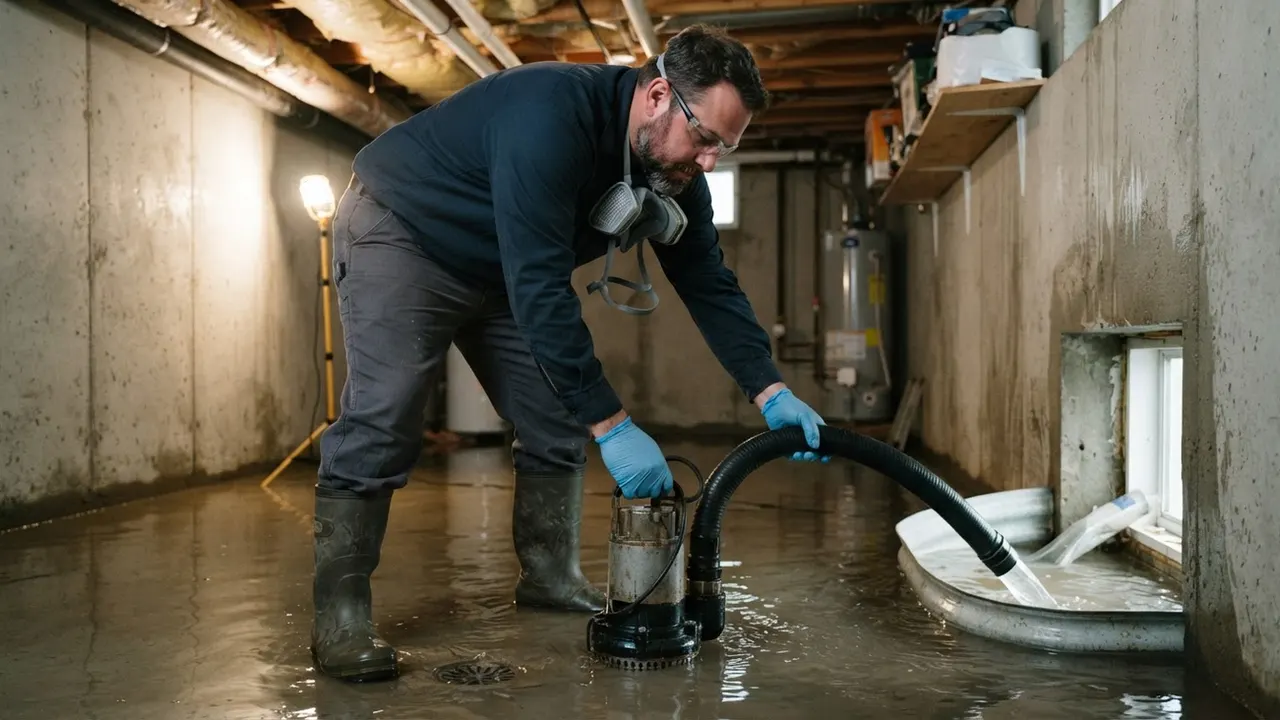
Wind-driven rain can enter at a roof opening and travel along framing before appearing as a ceiling stain. The visible mark may not show the full wet area, and insulation can hold moisture after the surface begins to dry. We protect the room, identify the interior water path, and arrange temporary roof protection when needed. Our inspection checks ceiling and wall materials beyond the stain. We remove damaged material where appropriate and monitor the remaining structure during drying.
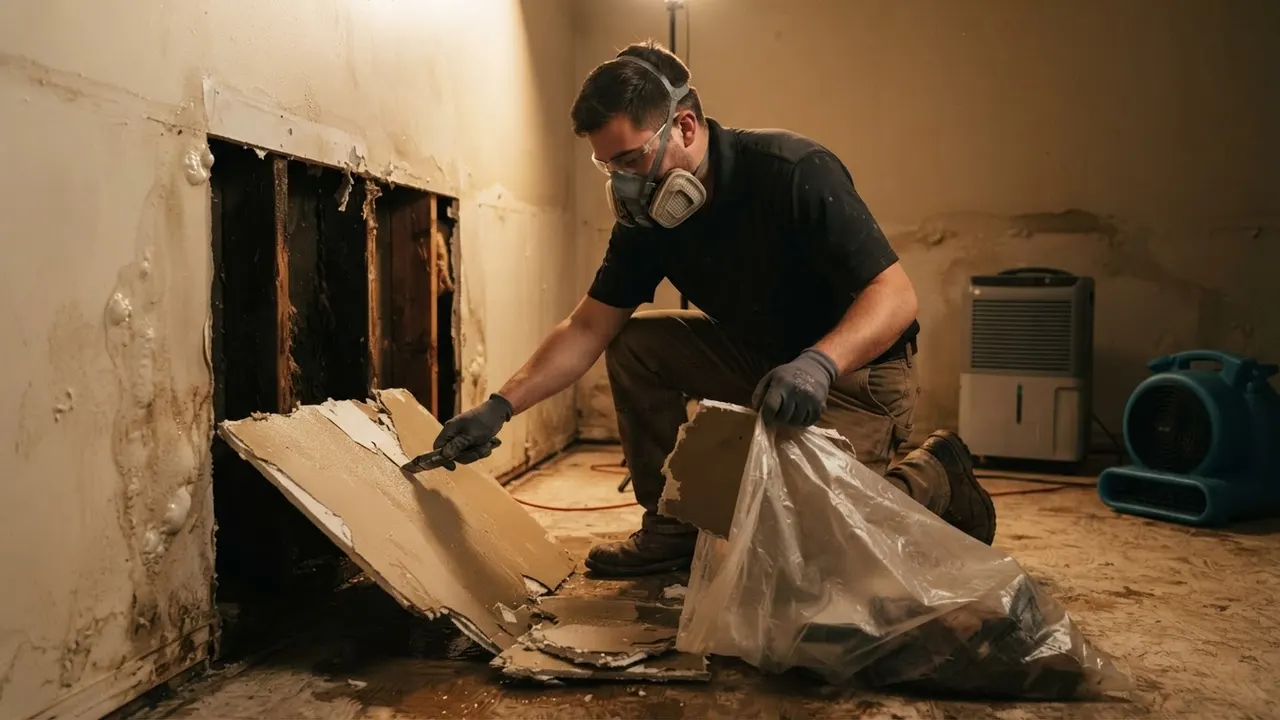
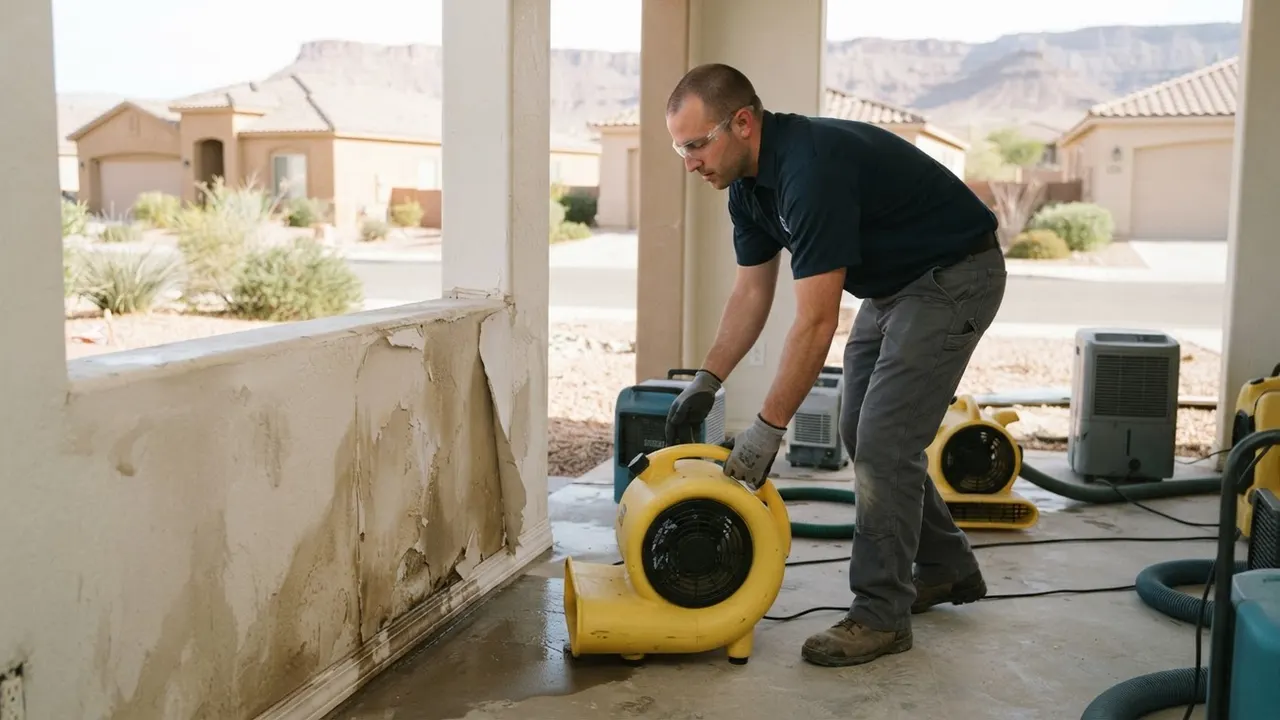
Heavy rainfall can collect in yards and move toward low doors or vulnerable openings. Once indoors, water may spread beneath carpet, reach baseboards, and wick into drywall. The entry point matters as much as the room where water is first noticed. We remove interior water, map the affected boundary, and inspect nearby floor and wall materials. We record the apparent entry path for the homeowner to address with drainage or exterior repair. Interior drying begins after the immediate water is removed.
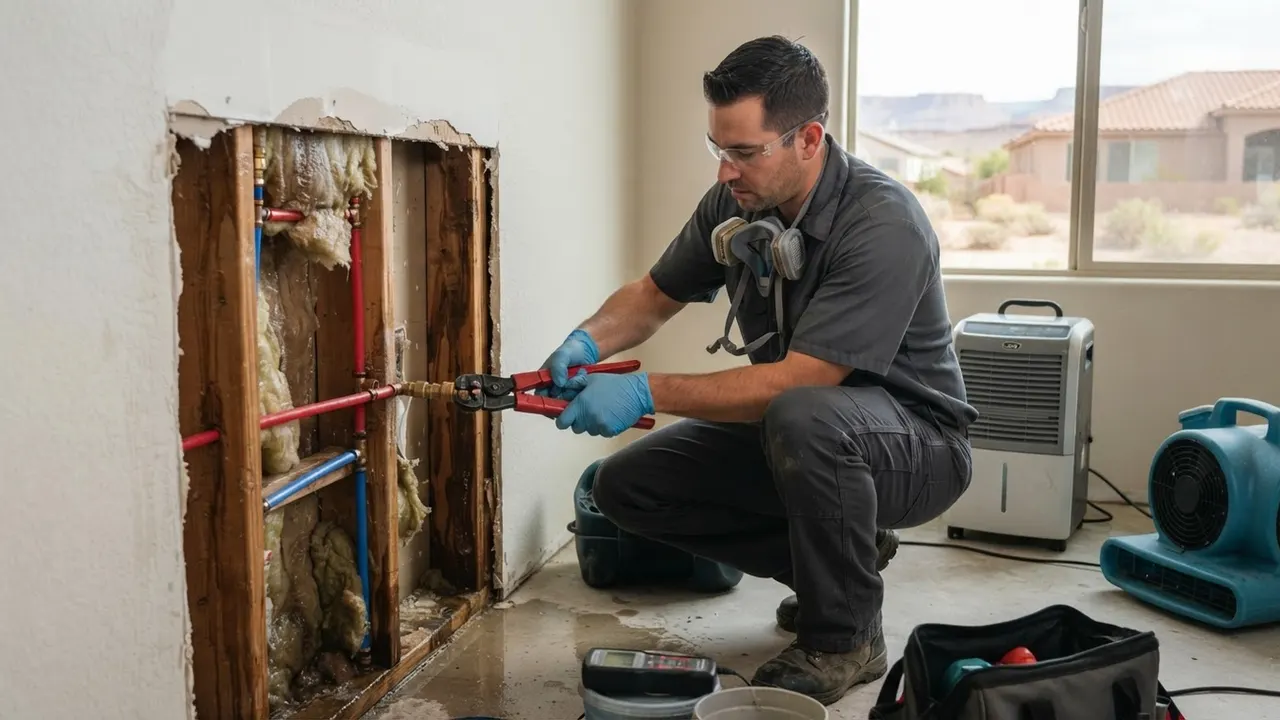
A dishwasher, refrigerator, or washing machine connection can release water behind or beneath the appliance. Water may travel below flooring or into a nearby cabinet before it reaches an open area, making the visible puddle an incomplete guide. We check the appliance area and adjacent materials, extract accessible water, and measure the floor edge and cabinet base. Once the appliance source is stopped, we set drying equipment according to the affected assembly and confirm progress with follow-up readings.
Watch for active leaks, ceiling changes, lifted flooring, damp odors, or contaminated water indoors.
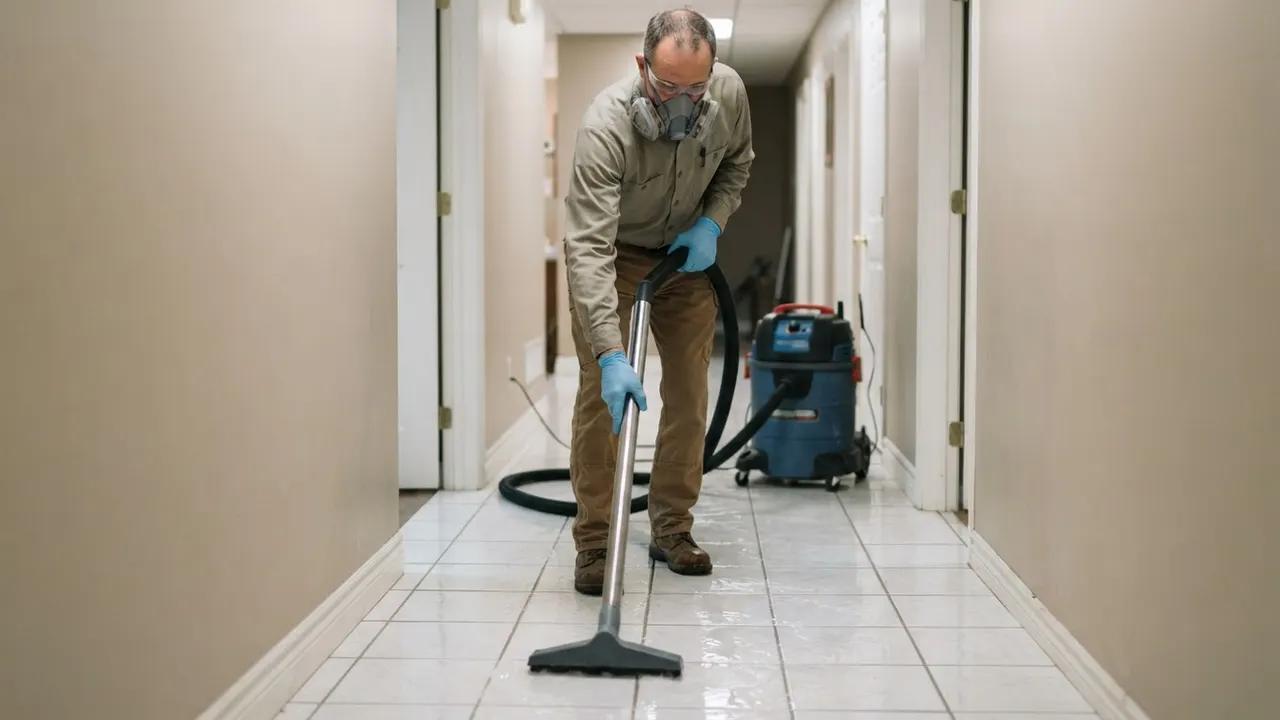
A continuing flow can point to a failed supply line, hidden pipe, or an ineffective shutoff. Close the main water valve if you can reach it safely, then call for help. Active water needs extraction quickly, especially when it is moving under cabinets or into adjacent rooms.
A bulging ceiling can hold trapped water and may fail without warning. Keep people and belongings out from beneath it, and do not puncture the surface. A roof leak or plumbing line above the ceiling needs source control and a careful check of the materials overhead.
Cupping boards and saturated carpet indicate moisture has reached flooring layers, not just the surface. Water can remain in seams or carpet padding after visible pooling is gone. Extraction and measured drying help determine whether materials can be retained or need removal.
A persistent musty odor can signal trapped moisture behind drywall, beneath a cabinet, or under flooring. The smell alone does not confirm mold, but it warrants an inspection when there has been a leak. We check hidden areas and identify the source before treating odor.
Wastewater and outdoor floodwater can carry contaminants that require controlled cleanup. Keep children and pets away, avoid direct contact, and do not run household fans through the affected area. Call promptly so the cleanup plan accounts for water category and material disposal.
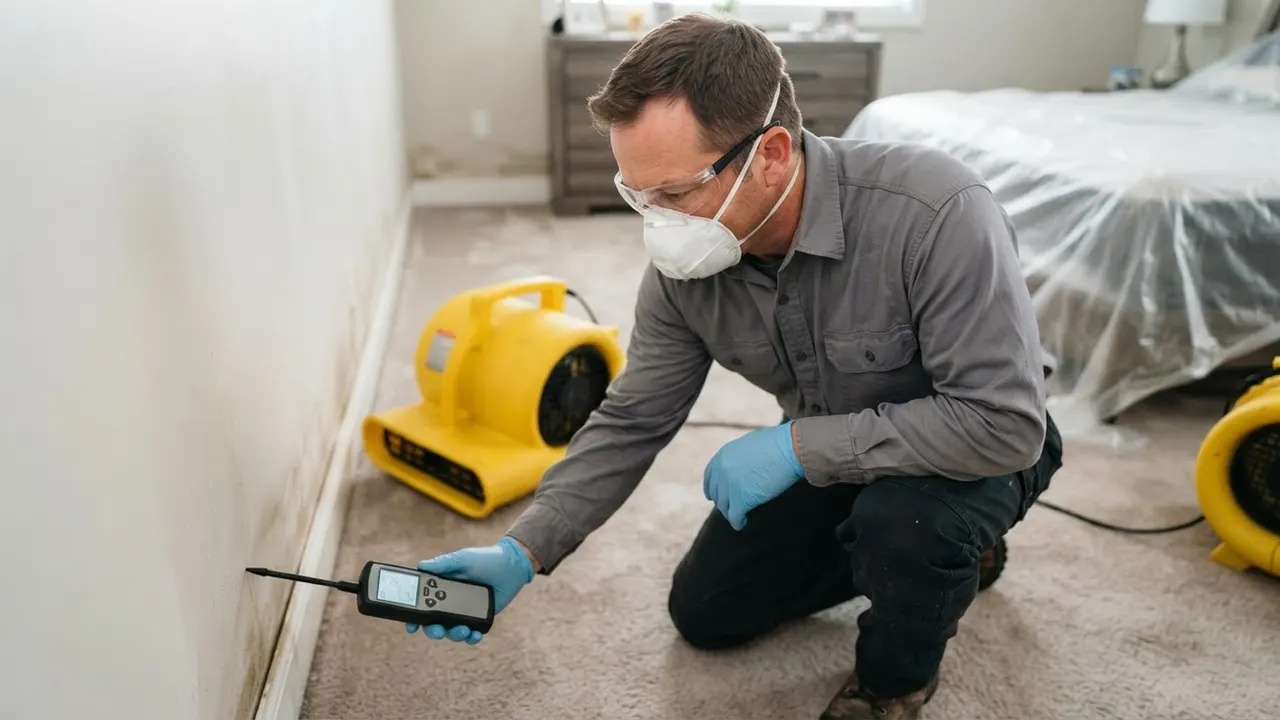
For emergency water damage repair in Lawrence, we first make the area safe, locate the water source, and separate affected contents from wet materials. We use a moisture meter and thermal imaging camera to check beyond visible staining, then select extraction and drying equipment for the floor assembly and wall cavities. Lawrence homes include original plumbing and family living spaces, so we protect clear walkways and work around occupied rooms. During winter, we check exposed plumbing for freeze-related damage; in monsoon season, we inspect roof entry and water paths. You can call from Lawrence Estates or near Lawrence Park and give us the ZIP code, access instructions, and whether electricity or water service is affected. We document moisture readings and revisit equipment placement as drying progresses.
A small supply-line leak can soak cabinet bases, drywall, and insulation before it becomes obvious. In Lawrence homes with original plumbing, surface drying alone does not confirm the wall cavity is dry. We trace the visible damage back toward the likely source, check adjacent materials, and record moisture readings. When water is trapped behind a finish, we explain access options before drying equipment is positioned. This helps prevent a damp cavity from being mistaken for a completed cleanup.
After intense rain, standing water can press against low thresholds or enter through vulnerable openings. Affected flooring and baseboards need prompt extraction, and exterior runoff should be considered when tracing the route of entry. We identify the wettest areas first, remove standing water, and check nearby walls and floor edges. Our inspection notes where moisture is concentrated so you can address drainage or entry-point repairs alongside interior restoration. We do not assume a wet floor came from a plumbing leak.
Rain entering through a roof opening can travel along framing and wet ceiling drywall or insulation beyond the visible stain. The room may look dry at the edges while moisture remains overhead. We map the affected ceiling and nearby walls, protect furnishings, and arrange emergency board-up or tarping when needed. We remove water-damaged materials where appropriate and dry remaining structure with monitored airflow. Once the source is controlled, we document the repair area for follow-up.
Repair work that falls within contractor licensing requirements must be handled by appropriately licensed trades. We distinguish water removal and drying from plumbing, electrical, or reconstruction work that requires a qualified contractor, and coordinate the repair path accordingly.
When renovation disturbs painted surfaces in covered older housing, EPA Lead-Safe rules may apply. We account for the possibility of regulated materials before intrusive removal and keep the work area controlled when repair involves painted drywall or trim.
When you call from Lawrence, a familiar landmark can help us confirm which part of the community you mean, but the service address remains essential. Lawrence Park and Lawrence Elementary provide local orientation, while the Mesquite Fire Department and Lawrence Shopping Center are useful reference points for directions. We use the address, ZIP, and access notes to plan arrival and equipment unloading. We do not imply that a landmark causes water damage or that work occurs at the landmark itself.
Lawrence Park is a local orientation point residents can use when describing their general location. Providing the service address as well lets our crew identify the correct property and plan the route.
Lawrence Elementary serves as a familiar reference for directions within the Lawrence area. It helps clarify location descriptions, while the customer's street address remains the basis for dispatch and access planning.
The Mesquite Fire Department is a recognizable local reference point for navigating the wider service area. Callers can mention it when giving directions, then confirm the property location and any gate or parking instructions.
Lawrence Shopping Center is a named local commercial reference. It can help a caller explain their general location, but service is performed at the supplied residential or business address.
Mesquite Town Center is a commercial destination in the wider Mesquite service region. It provides a regional point of reference for customers arranging service from Lawrence and nearby communities.
I-15 is a major regional route serving the Mesquite area. Our dispatch planning uses the Lawrence service address and current access details to select the appropriate approach.
Mesquite Boulevard is a primary local road and a useful orientation route in Mesquite. Provide your cross-street and property access notes when arranging service in Lawrence.
We take calls throughout Lawrence, including Lawrence Estates, Lawrence North, Lawrence South, and Lawrence Park. Each address gets the same first-step assessment: identify the source, check how far water traveled, and decide what needs extraction or controlled drying. Share your nearest cross-street or a familiar landmark when calling so we can confirm the property and plan access.
A reported kitchen supply leak in Lawrence Estates left water across the floor and wetting the lower cabinet edges before the homeowner found the shutoff.
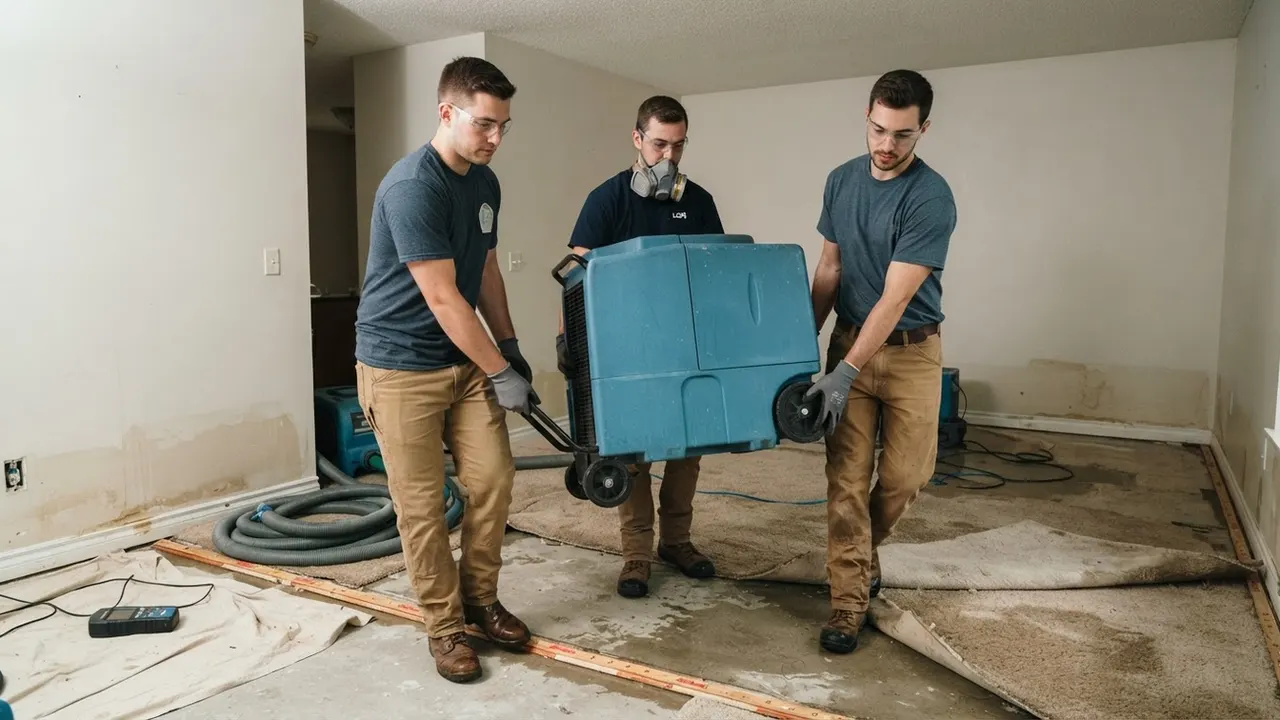
Our crew confirmed the leak had stopped, extracted standing water, and checked the flooring and cabinet base for moisture. We positioned air movers to move air across affected surfaces and a dehumidifier to support drying. The homeowner received a clear record of the wet areas and the next inspection points. The team documented 3 affected areas and took follow-up moisture readings over 2 days. Drying equipment was adjusted after the readings fell, and the homeowner had a defined handoff for cabinet and flooring repair.
A roof leak during monsoon rain left a ceiling stain and damp drywall in a Lawrence North home, with water reaching the room below.
We protected the room contents, traced the visible water path, and checked the ceiling and adjacent wall for moisture. After the roof opening was protected, we removed water-damaged material where needed and set controlled airflow for the remaining structure. Readings guided the drying checks rather than appearance alone. The inspection recorded 2 affected building surfaces and a defined drying area. The homeowner received documentation for the roof repair and interior restoration, with progress checks completed before equipment removal.
Stormwater entered a Lawrence South home after pooling in the yard, wetting the threshold, baseboards, and a section of carpet.
We extracted water from the carpeted area, lifted and checked the carpet edge where appropriate, and inspected the baseboards and lower wall. Our team recorded the water path so the homeowner could address the entry point as well as the interior cleanup. Drying equipment was placed to keep the affected area accessible. The crew documented 1 primary entry area and 3 material types for follow-up. The homeowner received a moisture-check plan and a clear separation between interior drying and exterior drainage work.
Spring rain can reveal drainage trouble around thresholds and low points in yards. Check for pooling after storms, damp baseboards, and water marks near exterior doors. Plumbing leaks remain possible at any time, especially around older fixture connections. Clear debris from drainage paths and inspect door seals before stormy periods. If water enters, photograph the entry area and move small belongings only when the route is safe.
Summer monsoon weather can bring intense rain and roof leak issues. A brief storm can wet ceiling materials or push water toward a low entry. Air conditioning condensate lines and appliance connections are also worth checking when a new damp patch appears. After a storm, look for fresh ceiling stains and wet window or door edges. Do not climb onto a wet roof; call for interior assessment and temporary protection.
Fall is a useful period to inspect roof details, plumbing shutoffs, and yard drainage before colder nights arrive. A small leak caught early is easier to isolate than one discovered after water has reached cabinets, flooring, or wall cavities. Test accessible shutoff valves and check beneath sinks for dampness. Keep the water main location clear so you can reach it quickly during a leak.
Winter brings a risk of frozen pipe damage where plumbing is exposed to cold air or poor insulation. A pipe can split and release water when temperatures rise. Wet insulation and wall cavities require inspection even after the visible flow stops. Protect exposed pipes and keep vulnerable areas from freezing. If a pipe bursts, shut off water if safe, avoid electrical hazards, and call for extraction and drying.
A strong water damage contractor in Lawrence should explain what happens first, how the source will be addressed, and how drying progress is measured. Ask who handles plumbing or reconstruction if the job extends beyond water removal. You should hear practical answers about equipment, contaminated water, documentation, and access to your home. If a contractor cannot explain what they will inspect or how they will know materials are dry, keep asking before you agree to work.
The answer should include inspection and moisture measurement, not a guess based only on visible staining. Ask what areas will be checked and how readings will guide drying. That shows whether the crew is looking for hidden moisture that can remain after surface water is gone.
Water extraction cannot solve an active plumbing failure by itself. A clear answer distinguishes emergency mitigation from plumbing repair and explains how the source will be isolated. You should know whom to call and what immediate action is safe at your property.
Contaminated water requires different protective practices, cleaning, and disposal than a clean supply-line leak. The contractor should identify the water category and explain how affected materials are handled. An answer that treats every kind of water the same is a warning sign.
Air movement and dehumidification should match the affected materials and room conditions. Ask how often readings are checked and what will determine equipment adjustment or removal. A measured process is more useful than a fixed equipment count with no progress checks.
Photos, moisture readings, and a description of affected materials can help you organize claim information. Ask what records the team provides and whether they can explain the mitigation work in plain terms. Your insurer determines coverage, but clear job documentation supports that conversation.
A small clean-water extraction often varies while multi-room drying can vary. The price depends on water category, affected materials, access, and drying duration. Sewage cleanup or concealed damage can add labor and disposal costs. We inspect the Lawrence property, explain the immediate work, and provide upfront pricing before proceeding. Share how long water has been present and which rooms are affected when you call.
Choose a company that responds clearly, measures moisture, documents affected areas, and explains how it will handle your specific water source. Mesquite Water Damage Company serves Lawrence and uses inspection, extraction, and monitored drying to address the loss. Ask how the crew distinguishes clean water from sewage, who handles plumbing repairs, and how progress is checked. Those answers help you compare providers based on the work, not an unsupported ranking.
Yes, Mesquite Water Damage Company accepts emergency calls at (833) 546-4116 at any hour. Call with your Lawrence address, ZIP code, whether water is still flowing, and the affected rooms. We use those details to triage the call and prepare for extraction or inspection. If the water is near electrical equipment or appears contaminated, keep people away while you wait for safe assistance.
Response time depends on the active call queue and crew location, so we confirm timing when you call. Give us your Lawrence address, ZIP 89027 if applicable, water source, and access instructions to help route the right equipment. While waiting, shut off the source only if safe, move dry belongings out of the affected area, and avoid standing water near electrical outlets.
Same-day attendance is available when crew capacity and the call schedule allow it. Contact us as soon as you find the leak, describe the water category, and tell us whether the source has stopped. We prioritize immediate water removal and assessment, then set a drying plan based on readings. For affordable emergency water damage repair Lawrence NV, early reporting can help limit how far water travels, though the final cost depends on the damage.
If water is spreading through your Lawrence home, call Mesquite Water Damage Company at (833) 546-4116. Our emergency line is available 24/7. Tell us what happened, whether the source is stopped, and which rooms are wet; we will guide the first steps and arrange service. We serve Lawrence and nearby Mesquite communities, including ZIP codes 89027, 89034, and 89024.
Call (833) 546-4116 to explain what happened and where water is collecting. We take calls for water damage requests and connect you with an independent company that can discuss service details directly. If the leak is active, shut off the source when safe and tell us whether the water reached electrical equipment, flooring, or more than one room.